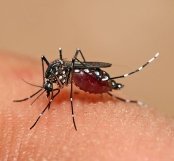
More than 2,400 infants in Brazil are currently being monitored for suspected brain damage, with Brazilian health officials suspecting that this alarming medical situation was caused by a mosquito-borne virus transmitted from monkeys to human beings.
In a statement, Brazil's health ministry has raised concern over the pathogen known as Zika, a virus first discovered in Africa over 70 years ago and is known to have caused serious neurological damage and even death to some patients.
"This is an unprecedented situation, unprecedented in world scientific research," the health ministry said in its statement, as quoted by CNN.
The ministry confirmed that it had already found the deadly virus in a baby with a rare condition known as microcephaly, where the patient suffers a shrunken skull.
Two mothers were also found to be carriers of the virus, particularly in the amniotic fluid, causing their babies to also suffer microcephaly.
Aside from these confirmed cases, more and more babies are being monitored. About 29 infant deaths are also being investigated for possible links to the mosquito-borne virus.
To highlight the severity of the medical situation, Brazilian paediatric diseases specialist Angela Rocha has even advised mothers to hold off plans to have babies soon, especially in heavily affected areas such as Pernambuco state.
"These are newborns who will require special attention their entire lives. It's an emotional stress that just can't be imagined...," Rocha told CNN.
"We're talking about a generation of babies that's going to be affected," she added.
The World Health Organisation (WHO) has also issued an alert due to the situation in Brazil, and has been monitoring cases to prevent the spread of the mosquito-borne virus.
This was not the first time that the Zika virus has been reported to have popped up in far-flung parts of the globe. In 2007, nearly three-quarters of the population of Yap Island in Micronesia were reported to have been infected by the virus.
In 2013, an estimated 28000 people were reported to have been infected by the same virus in Tahiti and other parts of French Polynesia.
Just this month, incidents of the infection by the Zika virus were also reported in the West African nation of Cape Verde.