Russian military intervention in Ukraine, including annexing the Crimea and supporting separatists in the east of the country, has poisoned relationships between the two states and outraged international opinion. Originating from Russian fears about Ukraine's perceived pivot to the West, there are no signs of the situation being resolved. However, the Orthodox Church in Russia and Ukraine is deeply involved in national affairs, and is fighting its own territorial battles alongside those fought by soldiers and diplomats. The stakes for national pride and long-term harmony are just as high. Now, a move by Ukrainian politicians to enlist the support of the Orthodox world's premier patriarch has raised the stakes very considerably.
Are you perhaps over-dramatising a little? What exactly has happened?
Not in the least. According to the Religious Information Service of Ukraine, two former presidents of Ukraine, Leonid Kravchuk and Viktor Yushchenko, have presented Ecumenical Patriarch Bartholomew with a 5,000-signature petition asking him to grant independent or "autocephalous" status to the Ukrainian Orthodox Church. This follows a previous vote in the Ukrainian Parliament back in June to approach him.
But what' s it got to do with Russia?
The Orthodox Church in Ukraine is technically under the jurisdiction of the Russian Orthodox Church, though it has a large amount of autonomy. There was an act in 1686 that subordinated Kiev to Moscow, and that's what Ukraine's Parliament wants Bartholomew to revoke.
Still not sure why it's such a thing.
In the old days of the USSR this subordination wasn't so much of a problem. But Ukrainian independence and particularly recent Russian aggression have led to increasing dissatisfaction with the current situation. There's even a social media hashtag that translates as "#occupier'schurch" to refer to the ROC. As one commentator, Kiev Metropolis Vicar Okeksandr Drabynko says: "The Ukrainian Orthodox Church is no longer perceived as a local church body. No matter whether we like it or not, in the eyes of a significant part (if not the most part) of modern Ukrainian society we have become a 'church of the aggressor state'."
So while most Ukrainian Orthodox believers adhere – many of them grudgingly – to the 'Moscow Patriarchate' of the UOC, there's a breakaway 'Kiev Patriarchate' which wants the UOC to be a separate national Orthodox Church. The logic is that Ukrainians, who bitterly resent Moscow's treatment of their country, just don't want to go to Russian-dominated churches.
This all seems very reasonable. It's all about the gospel, after all.
In a perfect world, no doubt. But there isn't the proverbial cat in hell's chance that the ROC is going to let the UOC go independent. Patriarch Kirill strongly believes Ukraine is part of his 'canonical territory'. The ROC is big, rich and powerful, and he's not going to let any of that go. But there's also a historical force behind this reluctance: Ukraine is where Russian Orthodoxy first began, and there's a deep attachment to the territory because of it. Aside from these religious reasons, however, there's more of a nationalistic one: with Ukraine and Russia at each other's throats, Kirill has to tough it out.
So where does Bartholomew come in?
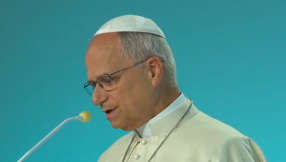
He is the Ecumenical Patriarch of Constantinople, the oldest and most prestigious of all the Orthodox Churches, and first among equals among all the 14 autocephalous patriarchs. The Ukrainians are effectively appealing to him over Patriarch Kirill's head.
That would go down well, I imagine.
Since we're doing proverbs, the lead balloon springs to mind. The ROC is engaged in a power play with the Ecumenical Patriarch, whose native flock in Turkey is tiny. Some in the ROC think its day is done, and that the Orthodox future is Russian. That is what lay behind its sabotaging of the Pan Orthodox Council by withdrawing at the last minute.
So this is a particular problem for Bartholomew?
Yes, and he will want to be very careful about how he responds to it. In the Orthodox world, unity – and particularly unity in national territorities – is terribly important, and no one is really happy with the situation as it is at the moment. But the ROC is very powerful, and he will want to avoid offending it as far as he can. The restoration of Estonia's autocephalous status in 1996 resulted in the breakdown of relations between Moscow and the Ecumenical Patriarchy for two years; this would be much, much worse.
Follow Mark Woods on Twitter: @RevMarkWoods