A full-scale programme of excavations in the Judaean Desert caves is needed to prevent artefacts like the Dead Sea Scrolls being lost to looters, according to the Israel Antiquities Authority (IAA).
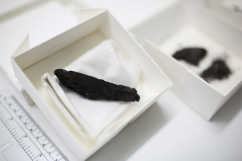
The scrolls, created over a period of several hundred years, were discovered in 11 wilderness caves between 1946 and 1956. They include not only ancient biblical texts but much other material which sheds light on the development of Judaism and early Christianity.
However, according to IAA director Israel Hasson, many other treasures have been lost to looters. "For years now our most important heritage and cultural assets have been excavated illicitly and plundered in the Judean Desert caves for reasons of greed," he said.
"The goal of the national plan that we are advancing is to excavate and find all of the scrolls that remain in the caves, once and for all, so that they will be rescued and preserved by the state."
Israel's minister of culture and sport, Miri Regev, said: "The antiquities robbers are plundering the Land of Israel's history, which is something we cannot allow. The Dead Sea scrolls are an exciting testament of paramount importance that bear witness to the existence of Israel in the Land of Israel 2,000 years ago, and they were found close to the Return to Zion and the establishment of the State of Israel in the Land of Israel.
"It is our duty to protect these unique treasures, which belong to the Jewish people and the entire world. I will work to increase the punishment against those that rob our country's antiquities."
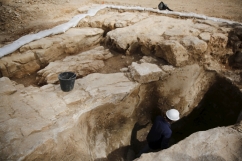
An excavation in search of scrolls in the Nahal Tse'elim area has already begun. Teams from the IAA's Unit for the Prevention of Antiquities Robbery (UPAR) and The Hebrew University of Jerusalem have been joined by around 500 volunteers from across the country. It is focused on the Cave of Skulls, where looters were caught in 2014. A previously recovered papyrus dating to around 139 BC, also thought to be from the cave, appears to be from part of an archive of documents belonging to Jews who fled to the desert after the Bar Kochba rebellion against Rome, and researchers hope they might find it still there.
According to UPAR director Amir Ganor: "The excavation in Nahal Tse'elim is an operation of extraordinary complexity and scope, and one that has not occurred in the Judean Desert in the past 30 years. Despite the rigorous enforcement actions taken against the antiquities robbers, we still witness acts of severe plundering that unfortunately are possible in such large desert expanses.
"There are hundreds of caves in cliffs in the area, access to which is both dangerous and challenging. In almost every cave that we examined we found evidence of illicit intervention and it is simply heart-breaking. The loss of the finds is irreversible damage that cannot be tolerated."