(CP) European bishops have condemned the recent decision by Turkish authorities to convert the Church of Saint Saviour in Chora, a UNESCO World Heritage Site in Istanbul, into a mosque, calling it an effort to dilute the historical roots of Christianity in the country.
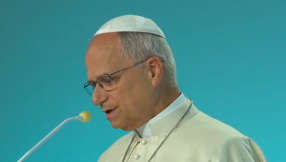
"This step further dilutes the historical roots of the Christian presence in the country. Any interreligious dialogue initiative promoted by Turkish authorities loses credibility," the Commission of the Bishops' Conferences of the European Union, or COMECE, said in a statement.
The transformation of the Church of Saint Saviour in Chora into a mosque earlier this month came four years after the similar conversion of the Hagia Sophia Basilica, another iconic Byzantine Christian site, into a mosque. Turkish President Recep Tayyip Erdogan formally inaugurated the Chora church for Islamic worship earlier this month.
"This is a step further in diluting the historical roots of the Christian presence in the country, and it is a regrettable decision that will make religious coexistence more difficult. With this action, any initiative regarding interreligious dialogue promoted by the country's authorities will inevitably lose credibility," stated Fr. Manuel Barrios Prieto, Secretary General of COMECE.
The Church of Saint Savior in Chora, built in the fourth century, is an emblem of Eastern Christianity and a significant historical marker of the Christian presence in Turkey. It was converted into a mosque in the 16th century during the Ottoman Empire. It was designated a museum in 1945 and reopened for public display in 1958 after extensive restoration efforts by American art historians.
The Greek Foreign Ministry issued a strong condemnation, stating that the decision to operate the Chora church as a mosque distorts its character as a UNESCO World Heritage Site and undermines its universal cultural significance. "The maintenance of monuments' universal character and compliance with international standards for the protection of religious and cultural heritage is a clear international obligation binding on all States," the Ministry's statement read.
The inauguration ceremony of the Chora church as a mosque, held remotely by President Erdogan from Ankara, was broadcasted nationally. The event included prayers led by local worshipers and speeches by prominent religious figures, such as Istanbul's mufti, Safi Arpaguş. The General Directorate of Foundations in Turkey organized the ceremony, which saw significant attendance from the community.
The U.S. State Department also expressed concern. A spokesperson encouraged the Turkish government to preserve and ensure access to sites that have hosted different religious communities, respecting their diverse histories. "We encourage the Turkish government to preserve and ensure access to sites and buildings that have hosted different religious communities in a way that respects their diverse histories," the spokesperson told the state-run Athens-Macedonian News Agency.
The conversions of churches are viewed as strategic efforts by the Turkish president to consolidate support from his conservative and religious base amid the country's ongoing economic challenges.
In 2020, President Erdogan and hundreds of worshipers participated in the first Muslim prayers held at the Hagia Sophia in 86 years, marking its redesignation as a mosque despite widespread international disapproval.
COMECE had called the change of status of the Hagia Sophia "a blow to interreligious dialogue." On that occasion, the bishops also pointed out Turkey's ongoing issues with hate speech and threats against national, ethnic and religious minorities.