Historical author, Charles Spencer, has warned that Britain’s historic churches are increasingly under threat due to the financial burden of maintaining them.
Writing for The Financial Times Spencer noted that in 2025 the Church of England alone needed over a billion pounds for major repairs across its 16,000 churches. Many such churches, especially those with smaller congregations, are “struggling to survive”, he argued.
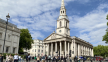
Spencer, who is also an earl and the brother of the late Diana, Princess of Wales, pointed to the example of St Mary’s Church in Battersea. Spencer received a request to help fundraise for the church, which needs a quarter of a million to restore its portico, pillars, railings and church bells.
The church has its own unique history, Spencer says. JMW Turner painted there, while poet William Blake was married there. The church is also the final resting place of Benedict Arnold, a man who briefly turned traitor during the American rebellion before reaffirming his loyalty to the crown.
Spencer pointed to the increasingly difficult environment faced by historic churches, especially since the ending of the government’s Listed Places of Worship Grant Scheme (LPWGS), which exempted historic churches from paying VAT on repairs.
While the government has introduced a successor scheme, it operates at a reduced budget and does not include the VAT exemption.
The Church of England is not alone in this struggle, Spencer noted - the Church of Scotland earmarked a third of its churches for closure back in 2023 and has been selling them off ever since. Indeed, in the last two weeks the Church of Scotland has already announced the transfer of ownership of an historic cathedral and has said it is considering something similar with the Abbey Church of Dunfermline, where Robert the Bruce is buried.
Meanwhile, the Church of England, despite stronger finances, is also struggling, if not to the same degree, due to its other commitments. Spencer pointed to a £150 million fund for survivors of Church-related abuse, £190 million for net zero and £7.5 million for an independent inquiry into child sexual abuse, on top of an increase in the stipend of clergy.
Spencer did not however mention the £100 million put aside for the controversial Project Spire, aimed at redressing the alleged historic involvement of the Church of England in the transatlantic slave trade.
Critics of the scheme, aside from questioning the historical accuracy of the claims behind it, have argued that the funds would be better used in struggling local parishes up and down the country.
Spencer said that while St Mary’s as a high-profile church in London was likely to get the funds it needs via generous benefactors, many smaller local parishes are likely to struggle, despite each one of them being a repository for history, heritage and culture.