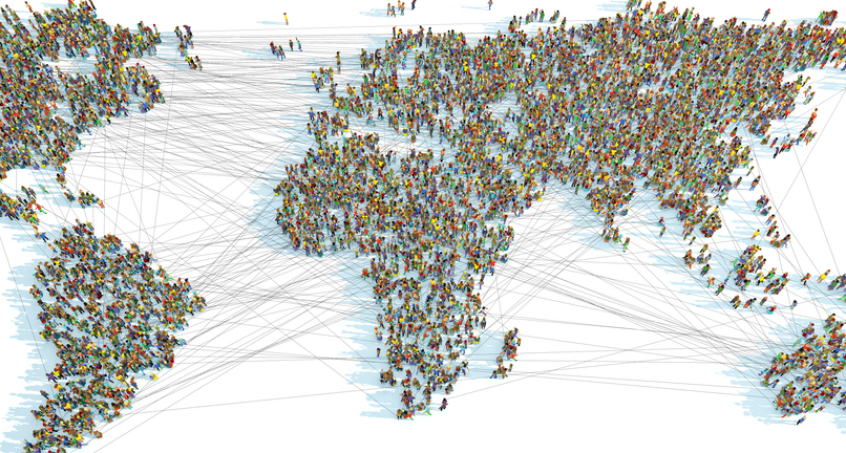
The CEO of Church Mission Society (CMS), Andy Roberts, has called for a rethink of traditional Christian mission models, arguing that organisations must give greater responsibility and decision-making power to local leaders as the centre of global Christianity continues to shift away from the West.
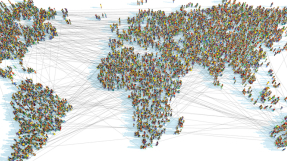
Reflecting on his first year leading the organisation, Roberts said the longstanding approach of Western churches raising funds and sending missionaries overseas no longer adequately reflects the increasingly diverse and interconnected nature of the global Church.
He urged mission agencies to reconsider how they distribute resources, develop partnerships and support Christian communities around the world.
“Mission today comes from everywhere and goes to everywhere,” he said.
While acknowledging the important contributions of earlier generations of missionaries, Roberts was now a recipient of missionary efforts.
“Britain is not simply a sending country any more,” he said. “We are also receiving the gifts, faith and missionary energy of the global church.”
He pointed to the growing involvement of Christians from Africa, Asia, Latin America and the Middle East in evangelism and church planting, including within Europe.
Within CMS itself, Roberts said the organisation is reassessing its approach to international mission to better reflect the increasingly global nature of the Church.
Roberts described the process as a “radical realignment” that would give local Christian leaders greater influence over how mission activities are developed and supported.
He explained: “I don’t mean change for change’s sake. I mean trying to keep realigning ourselves around what God is actually doing rather than preserving a model because it is what we know.
“We want CMS to become more globally rooted and less UK-centred, at least in terms of power and control.
“We want to put relationships, resources and decision-making closer to local leaders. We want to become lighter so that something larger can flourish around it.”
He said recent discussions involving representatives from CMS’s international networks had demonstrated the potential of a more collaborative approach, with leaders from different regions sharing experiences and contributing to strategic decisions.
However, he acknowledged that changing established structures would not necessarily be straightforward.
Among the issues under consideration are the organisation’s methods of recruiting, sending and financially supporting missionaries.
“The old model - recruiting somebody in Britain, asking them to raise support and sending them overseas for many years - still has value,” Roberts argued.
“We should not simply throw it away. But it cannot be our only imagination for mission.”
He suggested that fundraising could increasingly focus on supporting wider networks of locally led initiatives rather than individual missionaries.
Drawing on his previous experience in Brazil, Roberts recalled helping establish ReVive International, an organisation supporting vulnerable girls who had experienced abuse.
When he and his wife returned to Britain, they decided that leadership should pass to a Brazilian colleague who had been involved in the organisation from its early stages, alongside the local team.
Roberts said the experience revealed how deeply assumptions about foreign leadership could become embedded, both among missionaries and within the communities they served.
“Foreign missionaries can assume they need to lead. But communities can also become so used to outsiders leading that they struggle to imagine themselves doing it,” he reflected.
For CMS, he argued, meaningful change would require more than simply increasing international participation.
It would also involve sharing authority, trusting local expertise and supporting initiatives without necessarily retaining control over them.
He further highlighted migration as an important factor reshaping global evangelism, with Christians increasingly sharing their faith through diaspora communities and cross-cultural relationships.
He explained: “Today a missionary might be an African serving in Europe, a Middle Eastern Christian reaching fellow Arabic speakers in Britain, an Asian Christian following migration networks across continents, or a Latin American pioneer helping Christians somewhere else rethink what church could look like.
“The distinction between domestic and overseas mission makes less and less sense when people, churches and Christian movements are constantly crossing borders and the gospel is shared through ordinary people on the move who are carrying the love of Jesus with them.”
He added: “Migration itself is changing the mission map.”
Alongside organisational reform, Roberts stressed the need to prioritise discipleship, warning that “we have a discipleship problem in much of the world, including here in Britain”.
“Christianity can easily become an identity, a Sunday activity or a vague set of values without actually changing the way we live,” he continued.
Roberts argued that authentic discipleship should influence how believers approach money, power, relationships and injustice, rather than remaining confined to religious observance.
He reaffirmed CMS’s commitment to working with marginalised and overlooked communities, described as the “edge of discipleship”.
He said: “The edges might be communities affected by conflict. Indigenous peoples whose voices have been ignored. People from Muslim backgrounds exploring Jesus. Migrants reshaping churches in Britain. Pioneers creating Christian community in places where the traditional church has little connection.”
Ultimately, Roberts said the challenge for Western mission organisations was not to abandon their involvement in global evangelism, but to recognise that they no longer occupy its centre.
“Perhaps the Western mission movement’s challenge now is not to stop sending, stop speaking or stop contributing,” he said. “It is to stop assuming we are at the centre.”
That would require a willingness to reconsider longstanding institutional practices and allow Christian communities across the world to play a greater role in shaping the future of mission.
He concluded: “To hold on fiercely to the call to make disciples and go to the edges, while holding much more lightly our assumptions about who leads, who sends and what a mission organisation is supposed to look like.
“Jesus has always been rather good at disturbing those assumptions.”
The changing demographics of Christianity have increasingly brought questions of representation and leadership to the forefront of discussions about global mission.
Speaking at the World Evangelical Alliance’s General Assembly in Seoul in October 2025, Christian researcher Jason Mandryk of Operation World estimated that around 70% of Christians worldwide now live in Africa, Asia and Latin America.
He reported that nearly 70% of global Christian growth was taking place in Africa, raising questions about whether the leadership of evangelical institutions adequately reflects the geographical distribution of believers.
More recently, as reported by Christian Daily International, 100 Christian leaders from 33 African countries gathered in Johannesburg in February to discuss strengthening Africa’s role in international evangelism.
The gathering, convened by the International Mission Board, emphasised the importance of African churches developing their own missionary networks and taking greater ownership of outreach initiatives.
The discussions reflected a broader transformation in global Christianity, with the historical dominance of Europe and North America increasingly challenged by declining church attendance in Western countries and the growing influence of Christian communities elsewhere in the world over the past 100 years.