Hillsong United frontman Joel Houston has opened up about the personal and spiritual struggles he experienced during a turbulent chapter of his life, revealing that he spent two to three years largely away from church as he grappled with the loss of the community he had known since childhood.
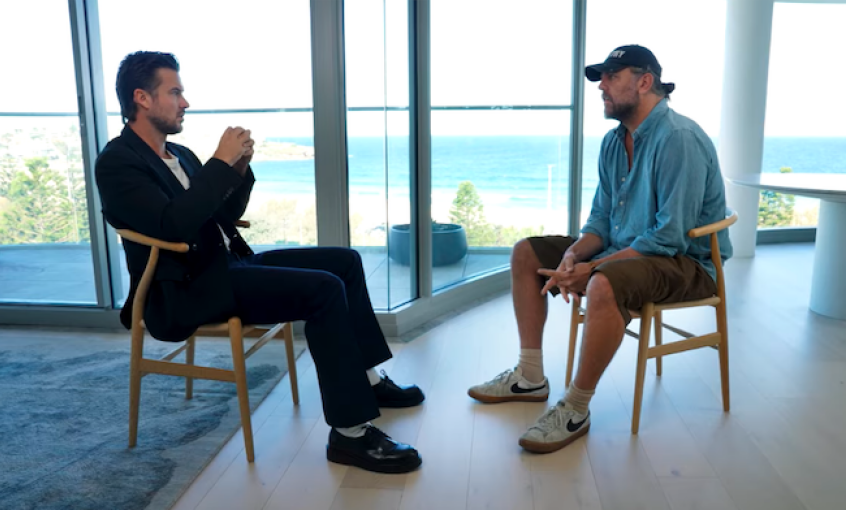
Speaking to Pastor Rich Wilkerson Jr on the ‘Mature Me’ podcast, Houston reflected on the pressures of Christian ministry, the emotional toll of Hillsong Church’s recent scandals and his journey towards rediscovering a more personal relationship with God.
The son of Hillsong founders Brian and Bobbie Houston, the Australian songwriter spent much of his life serving in the church and became internationally recognised as the leader of Hillsong United, the worship collective behind songs sung by congregations around the world.
However, Houston revealed that even during some of the most successful years of his ministry, he was privately struggling with feelings of emptiness, exhaustion and anxiety.
“Everything on the outside looked incredible, but inside … I was dying and I couldn’t explain why,” he said.
Despite having a loving family and achieving many of the things he had once hoped for, Houston came to realise that neither professional success nor public recognition could provide the fulfilment he was seeking.
“Sometimes the thing that you think you want, the thing you think is going to validate all the process that you're in, all the work, all the sacrifice, all the stuff that nobody sees ... where you feel like you’ve arrived, you’ve made it, that’s not it. It’s just not it," he said.
His reflections come after several difficult years for Hillsong, which has faced public controversy, allegations of misconduct and significant leadership changes, including the departure of his father, Brian Houston, as Global Senior Pastor in 2022. The Church said he had breached the Hillsong Pastor's Code of Conduct.
For Joel Houston, however, the challenges were not simply institutional or professional.
They also touched on his understanding of identity, belonging and what it means to follow God.
One of the most striking revelations from the interview was Houston’s admission that he had spent several years struggling to attend church.
“If I’m honest, Rich, I spent two or three years there ... not really going to church,” he said. “I know that's probably shocking for a lot of people maybe to hear ... but it’s just the truth.”
Houston stressed that his withdrawal did not mean he had abandoned his Christian faith or stopped loving the church.
Rather, he was attempting to process the loss of a community and way of life that had shaped him since childhood.
“I gave my whole life to that church,” he said. “That’s all I knew. I still love it. And I never in a million years imagined ... that that wouldn't be the church that I would be a part of.”
He compared the experience to going through a divorce, describing the pain of becoming separated from something to which he had devoted so much of his life.
Houston spoke about experiencing severe anxiety, including physical symptoms that affected his ability to participate in church life, and said that his personal struggles began even before the most public controversies surrounding Hillsong unfolded.
At times, Houston also turned to unhealthy coping mechanisms, including alcohol and cigarettes, as he attempted to navigate the emotional weight of his circumstances.
“Then I'm going, ‘Well I’m a fake … or am I fake?” he recalled. “But … deep down in my heart, I don't feel fake. Like everything to me is like it has to be solid. It has to be the real thing. I just want to be the real thing all the time, you know? I don't want to lie.”
Rather than continuing with public ministry simply because it was familiar or expected of him, he felt compelled to confront what he was experiencing.
“It felt insincere to me to kind of just get on with doing the thing that I've always done because that’s probably the easiest thing to do,” he explained.
His decision to withdraw from the spotlight was therefore not simply about taking a break from performing. It was also an opportunity to examine the foundations of his faith away from the spotlight.
“I was in a season where I really needed to do some soul-searching,” he said.
Having spent decades leading worship before large congregations and audiences, Houston said he began rediscovering the significance of worship in private.
Without the demands of touring, producing albums or preparing music for public consumption, songwriting became a space where he could express himself honestly before God.
“I felt closer to God ... just sitting by my piano or my computer late at night with no one around ... than some of the most intimate amazing moments that I’ve had on stage,” he shared.
While Hillsong’s music has reached audiences around the world, Houston suggested that the most important measure of the church’s impact is not the size of its gatherings or the prominence of its worship leaders.
Instead, he pointed towards the quieter, often unseen expressions of faith demonstrated by ordinary Christians in their local communities.
“What really matters is. .. the everyday ordinary people who are just doing ... the real stuff of loving God and serving in a local church and loving their neighbourhood,” he said.
Houston touched on the pressures placed on Christian leaders to continue serving publicly when they are experiencing personal difficulties.
He explained: “It gets hard too when you realize now you've got also a whole bunch of people who depend on you doing the thing that you're meant to do … I think that's a challenge for leaders and it's something I've really wrestled with.
“If I want to just stop doing United, I think, ‘Oh, what are they going to do? They're going to be without a job or they're not going to be able to do something.’ And it's like, no, like there's plenty of opportunity for people to, like, step in and do great things. It's, like, they don't need me.”
Houston suggested being honest about struggles rather than maintaining an appearance of spiritual strength.
He shared: “I actually believe it's more effective if we could just be who we are and be honest about where we're at … on the journey of sanctification … Like when people have been that way - been honest - that's what's really helped me in my journey. Not seeing everybody looking like they've got it all together all the time.”
Although the process involved considerable pain and uncertainty, he came to see it as an opportunity for deeper surrender to God.
He said: “We go through challenges. We fail. Every time we think that we're bringing this gift to God, it gets taken away from us. It's like we have to kind of go through this process of humbling ourselves again and then God does the thing either through us or through the next generation."
Despite the difficulties of recent years, he expressed optimism about the future and the possibility that his most meaningful years of ministry may still lie ahead.
He recalled a desire he had held since childhood: “I remember as a kid just saying, ‘I don't know what I want to do with my life, but I want the second half of my life to count more than the first half.’”
Having spent much of his adult life in Hillsong, Houston acknowledged that he has become accustomed to a quieter life away from the spotlight.
Nevertheless, he believes there may be opportunities ahead to serve God in new ways, including through music and public ministry.
“I think there’s a whole lot of songs in me that I hope are going to ... hopefully bring back to the world,” he said, adding that he feels the time may now be right to share them.
However, Houston emphasised that his ambitions for the future are no longer centred on repeating past achievements or pursuing success for its own sake.
“If God’s given us [a song] and I feel like I'm just going to bring that, and if it does the thing, it does the thing. And if it doesn't, it's okay,” he explained.
He added: “The end product is actually out of my hands. The process I'm responsible for ... that's within my control.
“When we realize that part it takes so much striving out … Results, of course, matter … but I have become a bit immune to success.”
Houston also revealed that he has found a new church community and is enjoying participating in congregational life again.
He concluded: “God is in the redemptive thing. There’s so much beauty in the tough stuff and I think there is something about, you know, if we're broken enough to be honest about some things and my hope is that the Spirit of God fills in all the gaps and that the fruit of the Spirit is in people's lives.”