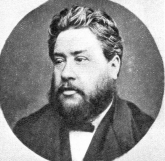
The Anabaptist Balthasar Hubmaier died today in 1528, burned at the stake in Vienna for his views on baptism. Three days later his wife was thrown into the Danube with a stone tied around her neck to drown.
Those were particularly brutal times, to be sure. The early continental Reformers – people like Martin Luther, John Calvin and Ulrich Zwingli – were breaking free from what they believed were the Roman Catholic Church's unscriptural additions to the Church's teaching and its widespread corruption. Their teachings had sparked off not just theological turmoil but political too; there were revolts against feudal oppression like the German Peasants' War of 1525 and political rulers took sides for and against the Reformation.
One thing everyone had in common, though, was that they hated the Anabaptists. But why?
Their name comes from two Greek words meaning 're-baptism' and key to their theology is the belief that the Church is to be made up of people who have chosen to be disciples of Christ, rather than those who are born in a particular country or grow up in a particular family. Baptism is the rite of initiation into the Church and everyone was baptized when they were a baby. For Anabaptists, that rite was meaningless. They didn't baptize babies and they would 're-baptize' those who had already been baptized as infants.
Some of them were pacifists, whose spiritual descendents are the Amish and the Mennonites. They refused to take any part in government, including serving as magistrates. Others – including Balthasar Hubmaier – were more open to believers taking part in warfare in a just cause if ordered by the state.
They suffered a crushing blow to their reputation with the terrible events of the Munster Rebellion of 1534-35. A group of radical Anabaptists under Jan Matthys and Jan Bockelson, also called Jan of Leiden, took control of the city in Westphalia. However, the city was besieged by its exiled Catholic bishop, Franz von Waldeck. Believing himself to be a new Gideon, Matthys led a sortie against him with only 30 followers; they were cut off and all killed. Matthys' head was placed on a pole and his genitals nailed to the city gate.
Jan of Leiden's behaviour became increasingly bizarre. He proclaimed himself the new King David and took 16 wives; he is said to have beheaded one woman for refusing to marry him.
The siege ended with the storming of the city and the massacre of its inhabitants. Both Protestant and Catholic leaders had turned against the Anabaptists, and Munster marked their end as a mass movement.
But Hubmaier died before Munster. Seeking safety in Zurich, he was tortured by Zwingli's men into renouncing his Anabaptist views, though he later recanted and wrote: "I may err – I am a man – but a heretic I cannot be, because I ask constantly for instruction in the word of God... O God, pardon me my weakness." While some Anabaptists were radical revolutionaries, others were saintly people who didn't believe in violence. But they were persecuted by Roman Catholics and Protestants who both resorted to torture and execution to curb their growth.
The Holy Roman Emperor, Ferdinand, was particularly vigorous; he unleashed a wave of burnings and drownings (drowning was the "third baptism" and "the best antidote to Anabaptism", he thought). In England, the Tudors persecuted Anabaptists too.
So why were they feared and hated so much? Granted that some of them, like Jan of Leiden and Jan Matthys, seem to have had seriously questionable characters, still: all they wanted to do was go back to the Bible. Their understanding of baptism is one that's shared not just by Baptist churches in the historic tradition but by growing evangelical and charismatic churches all over the world.
But it's this understanding that's so very radical. In those days, when Europe's identity was totally Christian, infant baptism was the way in which someone became part of the community. It made you a Christian, and it made you a citizen too; and the two things were very much the same.
When the Anabaptists denied that, they were striking at the roots of Europe's civilization. They were saying that the state had no authority over the Church and that the Church was made up of believers, not of citizens. They were declaring their loyalty to Christ first, just as in the early days of the Church believers had been forced to choose between Christ and Caesar. They were saying their first loyalty was to him, not to their prince or their governor.
It's this that both the Protestants and Catholics found so unacceptable and that led to such terrible persecution.
Churches that practise believers' baptism today can fail to appreciate the significance of what they do. It's seen as a testimony, or simply as obeying the Lord's command, and of course it's both those things. But baptism is also the rite of initiation into the Church. Believers' baptism says something about what we believe the Church really is; and while Christians today might peacefully disagree about this, we ought to remember that it was once important enough to die for.
Follow Mark Woods on Twitter: @RevMarkWoods