Pope Francis asked Protestants and other Christian Churches for forgiveness for past persecution by Catholics as the Vatican announced on Monday he would visit Sweden later in the year to mark the 500th anniversary of the Reformation.
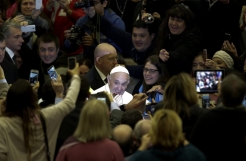
Speaking at an annual vespers service in St Paul's Basilica in Rome attended by representatives of other Churches, he asked "forgiveness for the un-gospel like behaviour by Catholics towards Christians of other Churches". He also asked Catholics to forgive those who had persecuted them.
The Vatican announced that on October 31 Francis would go to the southern Swedish city of Lund, where the Lutheran World Federation was founded in 1947, for a joint service with Lutherans to launch Reformation commemorations that will continue throughout the world next year.
Martin Luther, a German, is credited with starting the Protestant Reformation in 1517 with writing 95 theses – said to have been nailed to a church door in Wittenberg – criticising the CatholicChurch for selling forgiveness from sins for money.
It led to a violent, often political schism throughout Europe and Christianity, prompting among other things the 30 Years' War, the destruction of English monasteries, and the burning of numerous "heretics" on both sides.
Catholic traditionalists have accused Francis of making too many concessions to Lutherans, particularly in a common liturgy that both Churches will use during the 2017 commemorations.
They say the Common Prayer document, which will be used during the pope's visit to Lund, excessively praises Luther, who was condemned as a heretic and excommunicated.
Francis, however, has made dialogue with other Churches and faiths one of the hallmarks of his papacy.
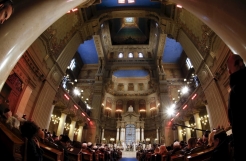
He has already visited the Lutheran church of Rome, the Waldensian protestant community in northern Italy, and Rome's synagogue. This year he is due to become the first pope to visit the Italian capital's mosque.
While his predecessors have visited Protestant churches, Francis has come under criticism from traditionalists who accuse him of sending confusing signals about inter-faith relations.
They have also contested guidelines issued this month for the shared liturgy.
"The Reformation and Martin Luther are repeatedly extolled, while the Counter-Reformation and the Popes and Saints of the 16th century are passed over in total silence," the traditionalist blog Rorate Caeli said.
Theological dialogue between Roman Catholic and Lutherans began in the late 1960s after the Second Vatican Council. But Catholics and Lutherans are still officially not allowed to take communion at each other's services.
When he visited Rome's Lutheran church last year, traditionalists attacked Francis for appearing to suggest in answer to a question that a Lutheran woman married to a Catholic man could decide for herself if she could take communion in her husband's church.