Boko Haram has killed more than 1,000 civilians since the beginning of this year and abducted hundreds, Human Rights Watch (HRW) said today.
The Islamist militant group has attacked villages and committed mass killings, and spread into neighbouring Cameroon, Chad and Niger since February, HRW found.
"Each week that passes we learn of more brutal Boko Haram abuses against civilians," said HRW's Nigeria researcher Mausi Segun. "The Nigerian government needs to make protecting civilians a priority in military operations against Boko Haram."
Earlier this week, it was reported that more than 400 women and children had been abducted by militants in Damasak, Borno state, which was freed this month by troops from Niger and Chad.
Souleymane Ali, a trader from the town, told Reuters: "They took 506 young women and children [in Damasak]. They killed about 50 of them before leaving. We don't know if they killed others after leaving, but they took the rest with them."
Ali said his wife and three of his daughters were among those seized.
"Two of them were supposed to get married this year. [Boko Haram] said 'They are slaves so we're taking them because they belong to us'," he added.
The militant group has abducted hundreds of women and girls since its uprising in 2009, most famously taking more than 250 girls from a school in Chibok, also in Borno state, last April. Those who have managed to escape have told stories of forced conversion, abuse, rape and forced marriage. Young boys have also been taken and forced to join the fighting, and children as young as ten have been used as suicide bombers.
The violence forced the Nigerian election committee to postpone the presidential vote for six weeks, and it is now due to take place this Saturday. Security is a top concern for voters, but current president Goodluck Jonathan claimed last week that all territory currently controlled by Boko Haram could be retaken by the Nigerian army within a month. On Wednesday, he said he was confident that Nigerian troops would liberate Gwoza, one of only three local government areas now controlled by militants, by March 27.
"We believe by tomorrow [Thursday] or latest Friday, we will be able to take over Gwoza. If we take over Gwoza it will not take us more than one week to clean up," he told a group of international election monitors in Abuja. "Now Boko Haram is not in position to come out and disrupt elections."
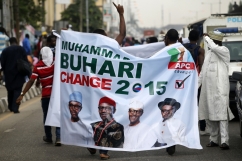
There has been some concern that violence will break out regardless of the outcome of the elections, however, even if Boko Haram are kept at bay. Alhough there are 11 candidates in all, Jonathan's main rival is Muhammadu Buhari. The two ran against each other in the 2011 election, with Jonathan winning over 58 per cent of the vote. Buhari claimed that voting had been rigged, and his supporters began targeting Christian communities in widespread attacks that left an estimated 800 dead.
"People were murdered, women were raped and this ultimately sparked retributory violence in areas such as the southern part Kaduna State where Christian communities were larger," a regional expert who wished to remain anonymous recently told Christian Today.
Today, however, Buhari and Jonathan signed an agreement to respect Saturday's outcome, and urged their supporters to remain peaceful.