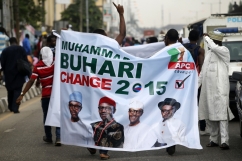
A Nigerian Archbishop has said that the country must undergo drastic changes, whatever the outcome of Saturday's presidential election.
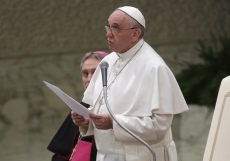
Speaking of the choice between the leaders of the country's two primary political parties Cardinal John Onaiyekan, Archbishop of Abuja, said: "My position is that there has to be change. I do not care who wins, whether it is PDP or APC, but whoever wins, there has to be change because people are not happy with what is happening; people are hungry, people are suffering."
His comments were made at the celebration of Cathedraticum in the church of San Giovanni in Nigeria's capital on Friday. Cardinal Onaiyekin said it was time for Nigeria to "claim the prophesy of Prophet Isaiah".
"The year is full of pessimism, anxiety and fear. It is like people no longer believe in this nation," he said, according to Fides news agency.
"People are running away but people like us cannot run away. We need to replace pessimism with optimism. Whoever wins will have to act differently."
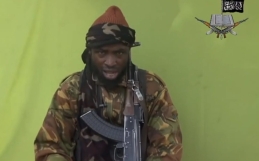
The election is due to take place on 28 March, after the government called for a six-week delay in order to increase security in areas besieged by Islamist group Boko Haram.
Last week President Goodluck Jonathan said that all territory currently controlled by the militants could be retaken by the Nigerian army within a month, and Cardinal Onaiyekan said he is optimistic that Boko Haram will be defeated.
But Danladi Musa, who oversees Tearfund's work in Nigeria, said there are still security concerns about the election.
"Some of the people who have fled their homes are worried about the elections because they can't go to the polling station where they are registered to vote," Musa said. "Elections are very important here, so it's a great loss to people if they can't take part in the democratic process that we have worked so hard to achieve."
"Security is the most important issue in this election, for many people. It used to be that people would vote purely along religious lines, and for some people that is still the case but, compared to 2011, it is not the main thing anymore. People want to know that we will be safe in our country."
Nigeria is a "beautiful, proud country," Musa added. "This crisis is a terrible thing that has happened, and we are determined to serve our brothers and sisters who are struggling, and to build a country which is strong and free once more."