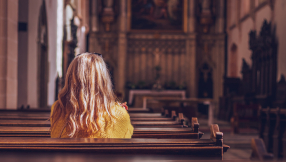
Almost 200,000 Catholics left the Church in Germany last year, according to figures which show an ongoing, steady decline in church attendance in that country.
There are 23.7 million Catholics in Germany, comprising 29 per cent of the population of 80 million, making Catholicism the largest religious group. But figures released at the end of last week by the German Bishops' Conference show that in 2015, a total of 181,925 people left the Church, while 2,685 people became Catholic, and 6,474 reverted to Catholicism.
When compared to the official statistics of 20 years ago, average church attendance is down from 18.6 per cent in 1995 to 10.4 per cent in 2015, while the number of baptisms has declined by more than a third, from almost 260,000 in 1995 to just over 167,000 in 2015.
The decline in marriages is even steeper, with 86,456 couples marrying in church 21 years ago, and almost half that number – 44,298 couples – tying the knot in church last year.
Despite the figures, the head of the conference, Cardinal Reinhard Marx of Munich and Freising described the Church as a continuing "strong force, whose message is heard and accepted".
Cardinal Marx added: "We need a 'sophisticated pastoral practice' that does justice to the diverse lifeworlds of people and convincingly passes on the hope of the Faith. The conclusion of last year's synod of bishops and the Apostolic Exhortation Amoris Laetitia by Pope Francis are important signposts...Pope Francis gives us courage... when he tells us that the way of the future Church is the way of a 'synodal church'. That means: All faithful are called upon, laypeople and priests! Together we will continue to give convincingly witness to our Faith and the Gospel."
Critics of the Church in Germany point to the Kirchensteuer, or church tax system which raises very large sums for the Church.
In 2013 for example, the Catholic Church in Germany received almost €5.5 billion (£4.6 billion) via the tax.
The tax is believed to put Catholics off practising their faith, and only around a third of German Catholics actually pay the levy, which originates from the 19<sup>th Century and is paid as a supplement to income tax.
The wealthy nature of the German Church was illustrated by Bishop Franz-Peter Tebartz-van Elst, the notorious "Bishop of Bling" removed for his lavish spending by Pope Francis in 2014.