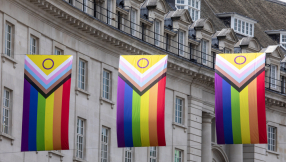
Last month human rights campaigner Peter Tatchell called on David Cameron and the Commonwealth Games organisers to speak out against the criminalisation of homosexuality in many of the countries represented. He and others pointed out that homosexuality is a punishable offence in 42 of the 53 Commonwealth nations. The penalty in some countries includes life imprisonment and even, in parts of Nigeria and Pakistan, death. These measures are in place despite every Commonwealth country having signed up to the Commonwealth Charter which states: "there shall be no discrimination against any country or person on any grounds whatsoever, including race, colour, gender, religion or politics" (Article 7).
Some Christians may wonder why they should be concerned about this, or indeed stand alongside a campaigner like Peter Tatchell who has not been, shall we say, a great friend of the Church in recent years. Christians may also ask where such high profile media campaigns for fundamental human rights are when it comes to religion. At the same time that Peter Tatchell received considerable airtime on this topic, a brutal programme of persecution against Christians was being carried out by ISIS in Mosul, only now receiving any considerable media attention.
Even so, this is an issue that Christians would do well to make their voices heard on – and do so by supporting Peter Tatchell in his call to end persecution against homosexuals wherever it takes place. Believing that someone should not be persecuted (or vilified) is not the same as agreeing with them. There are many things that Christians would regard as inappropriate, sinful even, but would see no benefit in criminalising – for example hetrosexual adultery or promiscuity. The same Bible passages that warn against homosexual activity include injunctions against gluttony, gossip and boasting – woe betide all of us if these should become grounds for imprisonment or state-sponsored harassment. Law and morality are complex bedfellows but we can all recognise that state law can't deal with all immorality. Often the best that law can do is mitigate the effects of fallen human behaviour by managing the consequences of things we'd rather didn't happen (like the Old Testament divorce laws).
There is also an issue here of Christians having to treat others the way they would want to be treated themselves. Again, this is a complex area and one that doubtless requires a number of nuanced qualifications. However, Christians cannot expect that in multi-cultural and multi-religious societies (where they may be a tiny minority) that their beliefs will be privileged. We may feel we are right and it would be better if our beliefs were privileged (ie held sway over others) but that is not going to be countenanced by a majority who don't share our basic convictions and faith premise. Christians can, however, make the case that their beliefs and the resulting way of life should be protected – that is, allowed the same freedom to be held and expressed as others. If I would wish such freedom for myself – I should (indeed will need to) be prepared to grant it to another, even if I might personally be appalled by their use of it. In the end, God will judge on such matters and we can confidently leave that to Him.
For those outraged at the treatment of Christians in many places today; for those who would be horrified at the thought of LGBT friends or family members being publicly hounded or castigated; for those who believe that tolerance is more than our secular culture's definition which insists that everyone hold the same beliefs, but actually involves standing up for those you disagree with – then this is an opportunity to show that Christians are not just another pressure group only concerned with themselves.
Andy Hunter is the FIEC's Scotland Director.