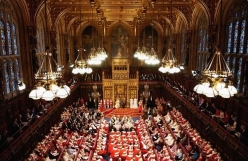
David Cameron is preparing to cut the power of the House of Lords by introducing legislation to prevent them from absolutely vetoing certain laws.
Although Labour have previously called for the abolition of the House of Lords, they said the decision was a "massive over-reaction" after peers voted to delay tax credits. Labour MP Graham Allen, former chair of the now defunct constitutional reform committee, said "the casual, undemocratic way in which these proposals have been produced is completely inappropriate to the gravity of the matters it addresses."
However the Tory peer who made the recommendations said he had struck "the right balance between preserving the vital role of the House of Lords in scrutinising legislation, and enabling the elected House of Commons to have a decisive role."
But what does this mean? Is it significant or is it just curbing the influence of an unelected, unrepresentative and antiquated body?
What do the House of Lords do?
Firstly the lords are there as a check and a balance on the House of Commons. They introduce legislation themselves and they also debate and scrutinise legislation introduced by the Commons. They can send it back to the Commons when they don't think it is adequately thought-through or they think it isn't beneficial for the country in the long run.
Aren't the Lords out-of-date and couldn't we do without them?
Certain aspects of the House of Lords are out-of-date and yes, many of the peers are stuffy and probably shouldn't be there. There is no doubt that our second chamber could do with reform.
But it plays an essential part in our Parliament. As I argued shortly after the tax credits debate, we must not bow to the false God of democracy – an unelected House of Lords is essential.
Peers are not worried about the next election and whether they will survive. As a result they have the time and leisure to debate and scrutinise in the broad national interest. Because they are unelected, they are not subject to the whims of public opinion which, in the long-run, is an incredibly beneficial part of our system.
What exactly is Cameron planning?
The review by former Tory cabinet minister Lord Strathclyde recommends peers should lose their right to absolutely veto certain pieces of legislation.
This would mean that for some legislation, if the Commons voted it through and the Lords disagreed, they could send it back once for review but if the Commons voted it through a second time, the peers couldn't veto it again.
If adopted, what legislation would be affected by these changes?
These changes would only affect what is known as secondary legislation. Delegated or secondary legislation is where the government makes a change to the law without needing to make a whole new Act.
This usually comes in the form of an amendment or alteration to a previous Act. Often they are not actively considered before Parliament.
So the Lords would still be able to veto primary legislation (new Acts) but not secondary legislation.
However, this is still a very significant change. There are usually several thousand pieces of secondary legislation every year and it's often used as a way of slipping through legislation without the publicity of an Act.
By removing the Lords' ability to scrutinise, Cameron is dangerously weakening opposition to government. An unelected House of Lords forms a crucial part of our democratic system and tampering with it must be done with extreme caution.