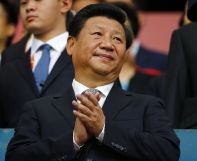
Chinese President Xi Jinping hailed the "brighter future" of close ties with Britain on Tuesday at the start of a pomp-laden visit that should seal more than $46 billion of deals but drew criticism from rights campaigners.
Britain rolled out the red carpet for Xi, welcoming him with a 41-gun salute before he rode to Buckingham Palace in a gilded carriage with Queen Elizabeth. At a state banquet, the queen called his visit a "defining moment in this very special year" for a relationship which should reach "ambitious new heights".
Prime Minister David Cameron hopes to cement a lucrative place for Britain as China's closest friend in the West and win investment in infrastructure, nuclear power and in the government's transformation of northern England.
Hailed as the start of a "golden era" in Sino-British ties, the visit has been criticised by activists who accuse Cameron of turning a blind eye to rights abuses, including what they call a crackdown on civil liberties since Xi came to power in 2012.
It has also ruffled feathers among some of Britain's traditional allies, such as the United States, where Xi's visit last month was tainted by friction over cyber-theft and Beijing's moves in Asian maritime disputes.
Xi paid little or no attention to the criticism, even when the speaker introducing his speech to both Houses of Parliament referred to Myanmar's opposition leader Aung San Suu Kyi as a symbol of freedom.
He instead told lawmakers via a translator that by working together both countries would "surely embrace an even brighter future" and that his visit would "lift the friendly ties between our countries to a new height" in a speech that made reference to Chinese proverbs and William Shakespeare.
Xi told the state banquet, where Britain's elite dined on turbot and venison under the glow from gilded candelabras, that "a growing China-UK relationship benefits both countries and the world as a whole".
Earlier, thousands of China supporters, waving "I love China flags" outnumbered the dozens of protesters who shouted "Don't trade away human rights" and were shepherded by police who made sure they did not disrupt the carefully choreographed welcome.
Nuclear Power
For Britain, the four-day state visit is the culmination of a three-year charm offensive, led by finance minister George Osborne who set out his strategy in 2013 by saying: "China is what it is. We have to be here or nowhere."
Britain said more than £30 billion worth of deals would be signed during the visit, creating some 3,900 jobs. The expected flagship deal is a plan for two state-owned Chinese utilities to invest in a £16 billion nuclear power project being built by French utility EDF at Hinkley Point in southwest England.
Britain has won praise from China for its discretion in dealing with human rights issues by raising them behind the scenes, a policy London says is more effective than hectoring Beijing publicly.
A visit to China last month by Osborne sealed the deal, with influential tabloid the Global Times praising his "etiquette".
But Cameron has said he will not duck sensitive issues such as the impact of cheap Chinese imports on struggling British steel-makers when he meets Xi on Wednesday, and Jeremy Corbyn, leader of the opposition Labour Party, raised human rights at his meeting with the Chinese leader on Tuesday.
Xi may express China's hopes that the European Union remains united - a thorny subject for Cameron, who has pledged to renegotiate Britain's relationship with the European Union before a referendum to be held by the end of 2017.
But any such sour notes, including heir to the throne Prince Charles' decision to not attend the banquet, are unlikely to spoil a visit that has been long in the making.
Britain was the top destination for Chinese money in 2014, with $5.1 billion in investment, according to law firm Baker & McKenzie. This year, it became the first Western nation to join the China-led Asian Infrastructure Investment Bank after Washington had pressed allies not to join.
In a pointed commentary before Xi's arrival in Britain, Global Times suggested that critics were jealous. "Apparently the concept of a 'golden era' between the two countries has made some people uncomfortable," it said in an editorial. "This has hurt the twisted dignity of those who still consider the West the centre of the world."