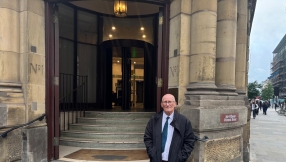
A parish vicar is to undertake a 40 day fast in order to highlight the national End Hunger Fast campaign.
Beginning on 5 March, Ash Wednesday, Reverend Keith Hebden – who is a spokesperson for the campaign - will consume only water and a glass of fruit juice each day for the entirety of Lent, a challenge that he hopes will help put an end to social injustice in the UK.
End Hunger Fast will launch on the same day, and hopes to bring to light the plight of hundreds of thousands of Brits who are going hungry simply because they cannot afford to buy food. Those behind the campaign hope to gather enough support to show the Government that its citizens want this issue to be addressed urgently.
Last week, a cohort of over 40 faith leaders, including 27 bishops from the Church of England, signed an open letter to David Cameron calling on the Government to "do its part" in ending food poverty.
David Cameron's welfare reforms have come under intense scrutiny in recent months, as policies which hope to reduce the welfare budget by £17.7 billion have left thousands of families without the funds to support themselves.
"Britain is the world's seventh largest economy and yet people are going hungry," the letter reads, stating that the coalition Government must take responsibility for the failures of the benefit system.
Many church leaders have waded into the debate, perhaps most notably Archbishop of Westminster Vincent Nichols who has blamed "inordinate" levels of taxation for increased poverty in the UK, and Lord George Carey, a former Archbishop of Canterbury who responded to the church leaders by saying their argument was "much too simplistic".
Mr Hebden, of St Mark's church in Marsfield, sees his fast as different from the day to day hunger many Brits are experiencing.
"I wouldn't call it 'hunger' when you fast for forty days because hunger, to me, is when you don't know where you next meal is coming from," he says in an interview with the Daily Mirror.
"There is a Christian tradition of going without food for forty days that goes all the way back to Jesus and has been practiced by a few throughout the last 2,000 years. In a sense what I'm doing is nothing new."
Instead, he is doing it as an act of solidarity, highlighting the vitality of Christians advocating on behalf of the most vulnerable members of society.
"I believe this is what the Church is supposed to be doing," he says.
"We should be standing with the people on the margins."
He has criticised the Government for "failing in its duty of care" to its citizens, and has called for others to join him in fasting "for a day, a week or as long as they feel able, in sympathy with half a million hungry Britons".
For more details on the campaign and to pledge support, go to www.endhungerfast.co.uk