Christians and other religious minorities are being persecuted in Swedish asylum centres, and provisions must be made for their safety, campaigners say.
According to the Swedish Evangelical Alliance, one Christian refugee in Kalmar, south-eastern Sweden, was threatened with "slaughter", and having his throat cut by a man who claimed to have fought with jihadist groups in Syria. A Pakistani Christian couple moved into a church when the husband's name was sprayed on a wall near their room calling for his death. A separate group of asylum seekers in Kalmar were forced to leave their accommodation when their harassment escalated.
"No one wants a society where people are divided up on the basis of religious beliefs, sexuality, ethnicity, or nationality, but this is an urgent situation that must be resolved," said Jacob Rudolfsson, deputy secretary-general of the Swedish Evangelical Alliance.
"Basic protection should be provided by the state, but when the state fails to protect Christian asylum seekers, Christian organizations must take action."
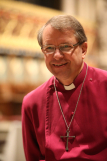
In a letter dated March 14, Patriarch Ignatuis Aphrem II, Supreme Head of the Universal Syrian Orthodox Church, urged Swedish authorities to intervene.
He said he was "dismayed" by reports of Christians being harassed while in asylum accommodation. "This situation does not reflect the culture of the peaceful and loving Swedish people," he wrote.
"Christians do not live in refugee camps in the Middle East, because, there too, they are persecuted by Muslim extremists. Because of that, most of the time, they are not entitled to aid from the UN. We, the Churches and community-based organizations, are doing our best to help them.
"To witness that they are once more being persecuted at Swedish asylum accommodations make[s] us very sad. We expect the Swedish Government and the concerned authorities to immediately make sure that these people are safe.
"A distinct asylum accommodation for Christians and other asylum seekers is essential. We appeal to you to set off such a place and give the word asylum back its true meaning of protection and safety."
In his response, director general of the Swedish Migration Board, Anders Danielsson, highlighted Sweden's long tradition of helping those fleeing war and persecution.
In 2015, the country welcomed more than 160,000 asylum seekers, the majority of whom were from Syria and other war zones. As of March 2016, there were around 180,000 people enrolled in the Swedish reception system, nearly 100,000 of whom were staying in accommodation provided by the Swedish Migration Agency.
Danielsson admitted that the unprecedented number of refugees coming to Sweden means standards of accommodation had been lowered.
"When so many, sometimes traumatized, asylum seekers are housed close together for a long time, there is an increased risk of tensions and conflicts between individuals," he said. "We are very much aware that asylum seekers sometimes bring with them conflicts that exist in their home country, such as conflicts involving Christian minorities or other vulnerable groups, and we look very seriously at the need to ensure that everyone feels safe and secure in their living environment."
However, calls for separate housing for Christians and other vulnerable groups "would go against principles and values that are central to Swedish society and our democracy," he said. "It would be considered a great failure having to resort to segregation as a measure."
Despite this, the Migration Board is in the process of carrying out an action plan to improve conditions for asylum seekers, Danielsson added, and individuals and families experiencing specific harassment may be moved to alternative accommodation.
"We are currently examining the possibilities of offering a limited range of special housing for individuals that feel unsafe where they are staying due to the behaviour of others. These facilities would be open for anyone in need of a safer place regardless of nationality of religious beliefs," he said. "The safeguarding of the right to asylum for those facing persecution for religious or other reasons is at the heart of what we do at the Swedish Migration Agency. We will continue to make every effort to provide safe reception conditions and ensure protection for those in need of sanctuary."
Morgan Johnson, the Swedish Minister of Justice, also wrote to Patriarch Aphrem to assure him that "bullying or harassment based on someone's faith, gender, sexuality or race, is not tolerated in any way" in reception facilities.
"The Migration Agency is working to increase the amount of available housing and I hope this will ease the tensions," he added.
Nuri Kino, founder of A Demand for Action (ADFA), a campaign group working for the rights of religious minorities in the Middle East, said not enough has yet been done.
In a recent article for Sweden's daily newspaper Svenska Dagbladet, he branded the situation at a number of shelters "alarming", and said many refugees had been forced to flee. "It's mostly Christians, Atheists, Druze and moderate Muslims that are being discriminated [against] by Islamic radicals," he wrote.
"We have to speak openly about what is happening in our country... before it's too late. I am not in favour of further polarization but there are lives at stake if we do not speak up. Innocent people are victims here, Christians, Muslims and others."
Kino is therefore leading charges to open accommodation for Christian asylum seekers who do not feel safe in existing facilities. Speaking to Christian Today, Kino said he felt compelled to campaign on the matter after being contacted by two women who were being threatened. They said they were told to convert to Islam and cover their heads by other asylum seekers, and they and their children were called "kuffar" – infidels. Eventually, a Muslim family moved into their room, forcing them to sleep in a common area without any privacy.
Kino began writing in Svenska Dagbladet in December, and was immediately inundated with hundreds of texts, emails and messages on social media. "I got more than 400 messages, all from people who were working in shelters, asylum seekers themselves, people from the authorities, the police, the migration agency, even from parliamentarians, saying: we're aware of this, and we need to get a grip on the situation."
Since then, the issue has been debated in parliament and government a number of times, though no concrete plans have been put in place. "It's still uncertain," Kino said. "Still people are being harassed and beaten up, it's a mess... It's very sad. Sweden cannot protect them as it looks like today. Many are Christians, and also moderate Muslims are treated the same way."
There is some good news on the ground, though. Kino said while the Migration Agency has not yet taken action from the top, people who work in the shelters are trying to deal swiftly with the problem. Some have employed people from the Middle East who understand the situation better, and some individuals are even paying private rent for families who have been mistreated.
"I believe it's not that the government or Migration Agency don't want to take action, it's just that it would be too much of a failure for the Swedish multicultural identity. It's too much to bear," he said.
"But until we get to grips with the situation, we need to make everyone feel safe. End of discussion. It's been debated too much, too many times, and it's enough now. We need to take action."
"It is obvious that we are not able to protect them at the existing accommodations," Kino said. "We cannot live on with the romantic idea of a harmonious mosaic of religions and ethnicity in our accommodations for asylum seekers, that time is past."