To many people, outer space is just a dark void made up of mostly dark matter and dark energy with floating heavenly bodies. As it turned out, even outer space, particularly our own galaxy, packs surprises sometimes.
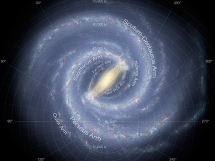
Astronomers at the European Southern Observatory (ESO) recently discovered a disc of young stars buried behind thick dust clouds right in the heart of the Milky Way, according to Business Insider.
The discovery was made through the use of the VISTA telescope, which took multiple images at different times of the central parts of the galaxy at infrared wavelengths.
Istvan Dekany, lead author of the new study on this previously unknown component of the Milky Way, said the discovery is surprising in the sense that the area of the galaxy where the young stars were found was previously thought to be the location solely of old stars.
"The central bulge of the Milky Way is thought to consist of vast numbers of old stars. But the VISTA data has revealed something new — and very young by astronomical standards!" Dekany, who comes from the Pontificia Universidad Católica de Chile, explained in a statement posted on the ESO's website.
Dekany's team analysed nearly four years of observations made by the VISTA telescope before arriving at their findings, which were published on this month's Astrophysical Journal Letters.
"This study is a powerful demonstration of the unmatched capabilities of the VISTA telescope for probing extremely obscured galactic regions that cannot be reached by any other current or planned surveys," the lead author said.
The young stars were particularly classified by the astronomers as Cepheids, or stars that expand and contract periodically.
"All of the 35 classical Cepheids discovered are less than 100 million years old. The youngest Cepheid may even be only around 25 million years old, although we cannot exclude the possible presence of even younger and brighter Cepheids," said Dante Minniti from the Universidad Andres Bello, Santiago, Chile, the study's co-author.