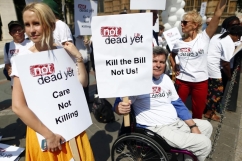
Right to die law: Why California governor signed it and why critics are not buying it

After months of introspection and indecision, California Gov. Jerry Brown finally came out to put his stamp of approval on a literally life and death matter. On Monday, he signed ABX2 15, also called the "End of Life Option Act."

Brown said he reached a decision after carefully examining his thoughts "on what I would want in the face of my own death."

"I do not know what I would do if I were dying in prolonged and excruciating pain," he wrote in a letter addressed to state lawmakers. "I am certain, however, that it would be a comfort to be able to consider the options afforded by this bill.

"And I wouldn't deny that right to others."

He said the most important question that needs to be answered is "whether the state of California should continue to make it a crime for a dying person to end his life no matter how great his pain and suffering."

He said as far as he is concerned, and those of the bill's proponents and supporters, the answer is "no."

Critics quickly pounced on Brown for his stated rationale in signing the new law. In a statement, the Californians Against Assisted Suicide said Brown and the bill's proponents should have first considered how the law will affect the poor, not the rich like them.

"As someone of wealth and access to the world's best medical care and doctors, the governor's background is very different than that of millions of Californians living in health care poverty without that same access," said the coalition. "These are the people and families potentially hurt by giving doctors the power to prescribe lethal overdoses to patients."

Before he made up his mind on signing the law, Brown heard numerous appeals for him to veto the legislation. Some of the opposition voices came from progressive legislators representing low-income districts.

After the state Senate passed the bill last month, The Californians Against Assisted Suicide said the option to seek death given to terminal patients is just a "myth in the context of our unjust health care reality."

"End-of-life treatment options are already limited for millions of people—constrained by poverty, disability discrimination, and other obstacles. Adding this so-called 'choice' into our dysfunctional health care system will push people into cheaper lethal options," the coalition warned.

However, Brown's signing of the law was greeted warmly by Christy O'Donnell, a 47-year-old single mother from Santa Clarity with lung, brain, spine, rib and liver cancer who testified in support of the legislation.

"I'm overjoyed for all the terminally ill people in California, who can now relax knowing they finally have the choice of aid in dying as one of their end-of-life options!" O'Donnell told CNN. "No more worrying that they will suffer great physical and emotional pain at the end of their life when they have already suffered painfully for so long as a result of their terminal illnesses."


related articles
Right to die – or wrong to kill?

Should people be allowed the right to die with the help of a doctor?

California right-to-die Bill advocated by Brittany Maynard passes first committee

The California Senate Health Committee passed the right-to-die bill which would allow terminally ill patients to end their own lives.

Fearing intense pain, woman with terminal  cancer asks California to allow her to die
Fearing intense pain, woman with terminal cancer asks California to allow her to die

Although faith groups oppose doctor-assisted suicide, a 46-year-old Christian woman diagnosed with terminal cancer is asking the state of California to allow her to die.

Right-to-die: Bid to overturn UK\'s assisted suicide ban is rejected
Right-to-die: Bid to overturn UK's assisted suicide ban is rejected

The European Court has rejected a bid to overturn the UK ban on assisted suicide and voluntary euthanasia.

Assisted suicide safeguards under threat, new evidence suggests

The safeguards surrounding assisted suicide are unstable and impermanent, a recent report has suggested.

Assisted dying is \'Pandora\'s box\' that will fundamentally change society - senior Tory MP
Assisted dying is 'Pandora's box' that will fundamentally change society - senior Tory MP

Assisted suicide is "understandable but wrong," Liam Fox, a senior Conservative MP, told Christian Today.

Five Reasons MPs Must Not Legalise Assisted Suicide

This is a milestone moment - here are five arguments against a change in the law.

MPs vote overwhelmingly against assisted dying

MPs voted overwhelmingly today to rejected the assisted suicide bill in one of the best attended debates on a Friday in recent months.

News
Faith in difficult times: lessons from 1930s Britain

Architectural historian Steven Brindle talks to Christian Today about the faith that shaped 1930s Britain, the churches that supported struggling communities and what lessons the decade might have for us today.

Campaign aims to mobilise 500,000 Christians for Christmas outreach

Shine Your Light is aiming to mobilise half a million Christians to share the gospel with five million people across the UK this Christmas, with more than 2,000 churches already signed up, organisers say.

The Church of England should repent for previous calls to ban 'conversion therapy'

The Church of England's uneasiness about the government's ‘conversion practices’ bill is a perfect lesson in the old adage, 'be careful what you wish for,' writes Dr Martin Davie.

Leaked Home Office report links 'Christian extremism' to traditionalist beliefs and immigration concerns

An internal Home Office report lists concerns about immigration, multiculturalism and changing social values among the characteristics associated with what it calls "Christian extremism", it has been reported.