
Chinese Christians are constantly facing repression from the Chinese government it has been widely reported. In a recent survey conducted by Forum 18 News Service, it indicates the Chinese government is blocking websites of a specific political, human rights, opposition and religious persecution nature.
In China, all internet service providers (ISPs) as well as internet content providers are required to be licensed by the government. During the two month survey, from mid-May to mid-July, Forum 18 News Service tested how far the Chinese government's Golden Shield firewall could be pushed.
Several hundred religious sites of all sorts were tested, including sites in a variety of languages (Chinese, Korean, Russian and Western languages) maintained by different denominations (including Christian, Muslim, Daoist, Buddhist, Jewish, Baha'i, Mormon, Falun Gong and Jehovah's Witness).
The results show that nearly all blocked websites have content critical of the government's policy on religion. Chinese internet users have access to a range of websites based outside the country that cover religious themes in Chinese or other languages.
Certain religious sites appear to be consistently blocked because the Chinese government does not like their content. However, sites that have been blocked to the public in China are still available for access to other countires around the world; websites that cover religious freedom issues, and even those covering repression within China.
In addition, specific sites covering Christian religious rights that report on persecution within China, especially those in Chinese, were also inaccessible. China Aid Association (www.chinaaid.org), a US-based group with up-to-date reporting on harassment of Protestant house churches, was inaccessible at all locations and on all the occasions.
Also inaccessible were the sites of the US-based Committee for the Investigation of Persecution of Religion in China (www.china21.org and religiousfreedomforchina.org), which contain information in Chinese and English on persecution of Protestants.
Compared to other countries such as Saudi Arabia, in specific blocked sites, a message appears stating bluntly that access is "not allowed"; while Chinese servers either tell the customer that the site is unavailable, that there is an error, or that the site cannot be found.
On the other hand, Catholic sites in the region were generally accessible, including the official Church site in Taiwan and that of the Jesuit-run Holy Spirit Study Centre in Hong Kong. However, the main site of the Hong Kong diocese (www.catholic.org.hk) was mostly inaccessible. On one occasion, Forum 18 could gain access to the English-language section of the site, but not to the Chinese-language section.
Furthermore, no sites belonging to the international headquarters of major faiths are blocked, such as those of the Vatican, the Ecumenical Patriarchate and other Orthodox patriarchates, the Adventist Church, the Baha'is, the Mormons or of international religious organisations (such as the Muslim World League, the World Council of Churches, the Lutheran World Federation, the World Alliance of Reformed Churches, the Baptist World Alliance and the World Evangelical Alliance).
Internet access is developing in a rapid way in China, especially in big cities like Beijing or the developed coastal region. According to the official China Internet Network Information Centre, the number of Chinese with access to the internet in June 2004 (its most recent figures) is 87 million. This number had been doubling every six months, but is now levelling off.
To the believers in China where religious freedom is limited, internet is a very precious tool to help evangelism and discipleship. It is also a channel to study God's word and download devotionals or messages.
Today it is not only China where censorship of websites is practiced by restrictive governments, but this happens in a range of countries, from Saudi Arabia to Iran, and Uzbekistan to Turkmenistan.




-

More than one in four US Protestant churchgoers believe some biblical truths become outdated
-

Wycliffe celebrates ‘remarkable moment’ as Bible translation advances at rapid pace
-

Could the Church face a ‘silver uprising’?
-

Christian leaders issue ‘sober and urgent call’ for Western Church to prepare for disruption
-

Church in Wales pauses plans to allow gay marriage
-

800 years on: Why St Francis of Assisi still captivates the world
Most Popular
News
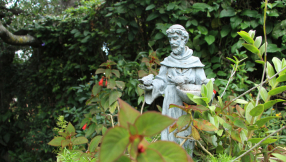
800 years on: Why St Francis of Assisi still captivates the world
4 October is St Francis’s Day, when Christians around the world remember the life and witness of Francis of Assisi. This year’s observance has particular significance, marking the 800th anniversary of his death. This is the story …

Majority back Ireland’s three-day abortion waiting period, poll finds
A new poll has found majority support for retaining Ireland’s mandatory three-day waiting period before an abortion, as lawmakers continue to consider legislation that would remove the requirement.

ONS figures show 'good' outlook for married couples
The Coalition for Marriage (CFM) has welcomed new figures suggesting that married couples are increasingly staying together.
Christians condemn sexual violence following UN report on Russia-Ukraine conflict
Most cases of sexual violence documented were against male prisoners of war.








