Christians living under persecution are risking their lives to translate the Bible into their local languages, according to Wycliffe Association.
Using revolutionary new MAST (Mobilized Assistance Supporting Translation) strategy, Wycliffe Association is equipping local people to translate the Bible for their communities in areas of Christian persecution.
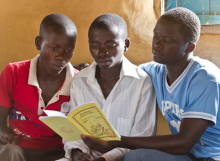
"Our breakthrough MAST strategy is accelerating Bible translation beyond anything we could have imagined, even a couple of years ago," said Bruce Smith, president and CEO of Wycliffe Associates. "It's not Westerners going into remote areas – it's nationals being equipped to translate God's Word themselves."
MAST reduces translation time significantly by translating the different books of the Bible simultaneously.
"Using local people as translators is having a tremendous impact already," Smith told Christian Today. "It immediately creates ownership for the local church. They see it as something they are engaged in rather than as the work of foreigners. They are engaged in every stage of the process. They choose the pace. They choose how to utilise it."
Due to the severe persecution in regions that Wycliffe operates, its trainers cannot be in the areas for long periods of time.
"Yes, it's dangerous," said Smith. "But so many people still have never seen God's Word in their own heart language."
The demand for translations of the Bible into local languages is coming from the local churches themselves. Despite the risks, "they are the ones responsible and the ones demanding it," Smith added.
Persecution has led to Bible translators having to flee or suspend their translation work for safety. Depending on the country, people face "personal persecution to structural persecution," he said.
"A number have been jailed and some tortured. One has lost their life. Others are working very carefully and quietly to avoid such direct antagonisms."
Wycliffe will equip national translators with technology to help them work discreetly and collaboratively, ensuring maximum speed and security in translation.
In one South East Asian country, which cannot be identified for security reasons, a dozen people working for two weeks were able to translate eighteen books. In South Asia, 29 translators were able to translate 76 per cent of the New Testament in just four days.
Wycliffe is currently trying to raise $400,000 in order to launch 80 translation projects in volatile areas of the world. The first ten of these are scheduled to be launched in the next few weeks.