
The Organisation for Security and Co-operation in Europe (OSCE) will hold a conference on anti-Semitism and other forms of intolerance across the OSCE area. The conference will commence on 8th June in Spanish Cordoba and the two day meeting will address issues on topics such as anti-Semitism and media, hate-motivated crimes and discrimination of Christians, Muslims and members of other religions.
Apart from six conference sessions during the meeting, four workshops will be held as well. Main topics that the workshops will focus on are freedom of religion or belief and intolerance towards ethnic and other minorities.
Governments from 55 states of Europe, Central Asia and North America are die to attend and have committed themselves to the 'Copenhagen Commitments'. This states among other things that:
"Everyone will have the right to freedom of thought, conscience and religion. This right includes freedom to change one's religion or belief and freedom to manifest one's religion or belief, either alone or in community with others, in public or in private, through worship, teaching, practice and observance. The exercise of these rights may be subject only to such restrictions as are prescribed by law and are consistent with international standards."
However, according to a Forum 18 survey, violations of these basic freedoms have been reported in several member states of OSCE, in particular in Turkmenistan, Uzbekistan, Belarus, Azerbaijan and Armenia.
In these countries, believers from all religious communities face restrictions when it comes to places of worship and worshiping itself, registration, censorship of religious literature and also the work of religious NGOs and charities.
Unregistered services and meetings, group Bible studies and religious meetings at home are all illegal in countries like Uzbekistan, Turkmenistan, Belarus and Macedonia.
Registration of religious groups before they start the work in the country is compulsory in Turkmenistan, Belarus, Uzbekistan, and Kazakhstan (if new national security amendments will pass the Parliament).
Among the countries where it is almost impossible to register for members of not-favoured religious groups by the government or members of small faith groups are Belarus, Czech Republic, Austria, Moldova, Slovenia, Slovakia, Macedonia, Russia and Latvia. In these countries small religious groups and churches are being run with a lesser status and fewer rights.




-

The Church of England should repent for previous calls to ban 'conversion therapy'
-

Ex-BBC reporter tells of 'cabal' of journalists who influenced trans coverage
-

NI conversion therapy ban 'dead in the water' after consultation
-

Belfast City Council votes again to celebrate abortion after failed attempt
-

Why John Stott’s ‘Christian Counter-Culture’ still challenges the church
-

Widow of Christian killed in Nigeria takes plea for persecuted Christians to Downing Street
Most Popular
News
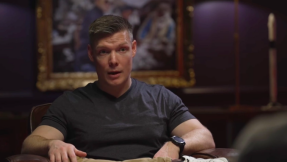
Wes Huff addresses plagiarism allegations
Scholar Dan McClellan alleged that Wes Huff plagiarized a 2016 Tyndale Seminary paper.

Adult baptisms rise by a third as Church of England sees fifth consecutive year of growth
Adult baptisms in the Church of England have increased by a third in a year, with almost 10,000 adults being baptised in 2025, according to newly published figures.

Not too small for God: how His Kingdom grows through ordinary people
When we look throughout the Bible, from the Old Testament to the New, we discover that God has always worked in unexpected ways, often choosing the very people the world would overlook to accomplish His extraordinary purposes.

Faith in difficult times: lessons from 1930s Britain
Architectural historian Steven Brindle talks to Christian Today about the faith that shaped 1930s Britain, the churches that supported struggling communities and what lessons the decade might have for us today.





