
The Prayer Book Society has launched a new website ahead of yearlong celebrations in 2012 to mark the 350th anniversary of the 1662 Book of Common Prayer.
The website, www.bcp350.org.uk, details the history of the liturgy and national and regional events marking its anniversary.
It has been endorsed by politicians, Church leaders and commentators, including Tory MP Mark Pritchard, the Bishop of Lincoln, the Rt Rev John Saxbee, Lord Waddington QC and Joanna Lumley.
A spokesman for the Prayer Book Society said the website would also feature a new online version of the 1662 Book of Common Prayer.
“The website will become the centrepiece of all that 2012 means,” he said.
The website was launched during the Prayer Book Society’s annual conference last week.
The conference was joined by several high profile speakers, including newspaper columnist Peter Hitchens, who said the Book of Common Prayer was “the very stuff of inspiration”.
“The Prayer Book is beautiful precisely because it is true,” he said.
Popular blogger, the Rev John Richardson, criticised some contemporary Anglican liturgies for taking out traditional words like “wrath” because some clergy are “uncomfortable” with them.
He said the changes amounted to rewriting the relationship between Christians and God, and redefining God.
“For it really does come down to fundamental questions about ourselves and God and how we stand in relation to one another," he said.
"Contemporary Anglican liturgies have already redefined this relationship as one which is rather more comfortable — to use a popular phrase, rather less ‘edgy’ — than the 1662 Book of Common Prayer assumes.
“The next stage in liturgical revision is, we know, to render God rather less distinct, rather less clear-cut, as the gendered language of Father, Lord, He and Him is replaced by gender-inclusive terms or a ‘balanced’ use of male and female imagery.”
His comments come after the Episcopal Church in Scotland decided to remove masculine references to God from its liturgy earlier in the month. The Church said it removed terms such as ‘Lord, he, his, him’ and ‘mankind’ from its services because God is “beyond human gender”.


-

Christian advent calendar sales 'soar' after online storm with Meghan Markle fans
-

Christian teacher challenges dismissal after sharing pro-life views in class
-
What’s so fascinating about Church of England vicars?
-

Half of Catholic churches in Glasgow to close
-

The questions Britain must answer about Christian free speech
-

Christian campaign asks shoppers to reduce reliance on retail giant Amazon
Most Popular
News
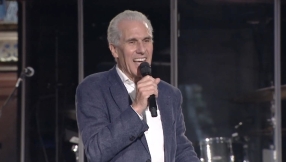
Nicky Gumbel elected to Church of England parliament with a call to put evangelism first
The founder of the globally influential Alpha Course, the Rev Nicky Gumbel, has been elected to the Church of England’s General Synod.
‘Strength does not always look impressive’: living with OCD as a Christian
Thea Joshi, of the Centre for Mental Health, reflects on living with OCD as a Christian and what churches and fellow Christians can do to help those living with the condition.
Church of England receives £13m under new scheme to preserve historic churches
A Church representative said he was conscious many churches had not received the funding they seek.
Petition against ban on church's street preaching delivered to Colchester City Council
Officials first said the preaching was too loud before moving on to objections about the content.








