Thea Joshi, of the Centre for Mental Health, knows from personal experience how obsessive-compulsive disorder intertwines with faith.
In her new book, When Thoughts Get Stuck, co-written with Anglican priest Will Van Der Hart, she reflects candidly on living with OCD as a Christian, the challenges of religious obsessions, and the slow but hopeful journey of recovery.
Far from being simply a problem of overthinking, OCD can affect how people pray, read Scripture, participate in church life and understand their relationship with God.
Through her own story, Joshi offers encouragement to those struggling with intrusive thoughts while also helping churches better understand a condition that is often misunderstood.
Christian Today spoke with Joshi about what OCD is, how faith can sustain people through the condition, and what recovery can look like when healing is not always straightforward.
When people hear OCD described as the ‘doubting disease’, they might imagine ordinary feelings of uncertainty or overthinking. How would you define OCD?
Put simply, OCD involves obsessions and compulsions. Obsessions create significant anxiety or distress, and compulsions are the behaviours people use in an attempt to relieve that distress.
OCD can manifest in many ways. Common themes include fears of causing harm, contamination, health concerns, morality, sexuality and abuse.
The compulsions associated with those fears can be just as varied: checking, counting, praying, mentally replaying events, reassuring yourself with certain phrases or avoiding situations that feel triggering.
The way OCD manifests is often highly individual. As diverse as people are, OCD can be equally diverse in the forms it takes.
What does having OCD actually feel like from a spiritual perspective for the person experiencing it?
I can only speak for myself. From a spiritual perspective, OCD can create a relentless sense of uncertainty. Things that matter most to you often become the very things OCD targets. For a Christian, that can mean fears around faith, salvation, obedience, sin or whether you have responded correctly to God.
The experience can be exhausting because the desire for certainty never feels fully satisfied. Even when reassurance is found, OCD often returns with another question, another doubt or another imagined possibility. Living faithfully can therefore require learning to trust God even when absolute certainty feels unattainable.
You write about your OCD being triggered in church before the service had even begun. Why was that, and what was that experience like?
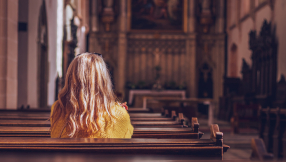
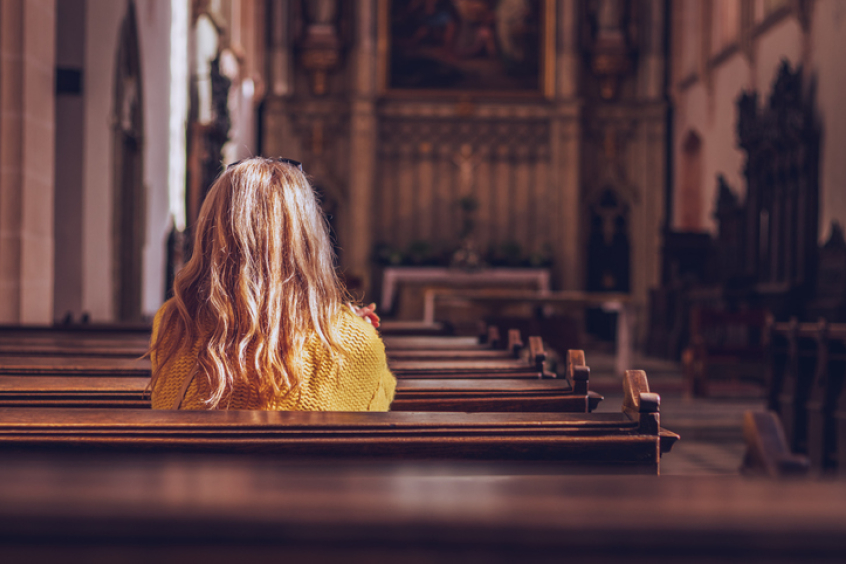
What should have been a place of worship could become a place of intense anxiety. Even before a service began, I could find myself caught up in fears, doubts and compulsions, trying to achieve certainty or reassurance before I felt able to settle and engage.
What do you wish the people around you at church had understood at that time? Has anything got better in that respect?
I wish people had understood that OCD is not simply overthinking or being overly cautious. The behaviours people see are usually responses to very real distress.
Compassion is enormously important. Rather than assuming someone is being difficult or irrational, it's helpful to recognise that they may be struggling with overwhelming anxiety.
Awareness has improved in many places, but there is still a long way to go. The more churches understand OCD, the easier it becomes for people to talk openly and seek support.
Are there things that loving people can do with the best intentions that actually make OCD more difficult?
Yes. One of the biggest is reassurance.
People naturally want to comfort someone they care about, but repeatedly providing certainty can sometimes reinforce OCD rather than help it. The disorder teaches people to seek reassurance whenever anxiety rises, and others can accidentally become part of that cycle.
The most loving response is not always to answer the question yet again. Sometimes it is to support someone as they learn to tolerate uncertainty and resist compulsions, even when that feels uncomfortable.
What does it look like to read Scripture through the lens of OCD?
OCD can attach itself to Bible reading in much the same way it attaches itself to other important areas of life.
A person may feel compelled to reread passages repeatedly, analyse every phrase, seek perfect understanding or become trapped in fears that they have misunderstood God's will. Reading Scripture can become less about receiving God's word and more about trying to find certainty.
Part of recovery is learning to engage with Scripture faithfully without demanding impossible levels of certainty from every verse or every spiritual experience.
In your book you quote Jesus' words in John 16:33 and describe Christian life with OCD as an experience of both “the trouble and the triumph”. What do “trouble and triumph” look like when recovery doesn't necessarily mean never experiencing another intrusive thought? And do you sense any tension between believing that God is loving and powerful, yet living with an illness that he hasn't simply taken away?
I can only speak from my own experience. I've been greatly encouraged by Vaneetha Rendell Risner's book Watching for the Morning, which explores many of these themes so helpfully.
I often come back to Romans 8 and the promise that God works all things together for the good of those who love him. That good may not always look like the immediate healing we want. Yet God remains good, even when we are living through painful circumstances.
The death and resurrection of Jesus are the ultimate example. At the cross, everything appeared hopeless and devastating. Yet God was accomplishing the greatest redemption imaginable. Sometimes we cannot see what God is doing, and that is incredibly painful when we are living through suffering ourselves. Nevertheless, I believe he is still working through even our hardest experiences for his glory and our good.
There is a tension there. We live in the “already and not yet” of God's kingdom. This world remains broken. Some wounds are not fully healed in this life. But that reality does not stop God being good.
It's a difficult truth to live with, but I believe it.
Has living with OCD changed your understanding of what healing, strength and even a fruitful Christian life can look like?
Absolutely.
Many Christians grow up hearing stories about doing extraordinary things for God. Those stories are encouraging, but chronic illness can make you wonder what fruitfulness looks like when you struggle simply to get through the day.
Sometimes faithfulness looks like getting out of bed and trusting God for the next breath. Sometimes it looks like relying on Jesus for the next ten minutes, then the next day, and then the day after that.
Living with OCD has changed my understanding of strength. Strength does not always look impressive. Often it looks like weakness that depends entirely upon Christ. When our vulnerability is exposed, that can be where God's strength becomes most visible.
The same is true of healing. Healing does not necessarily mean never having another intrusive thought or never feeling anxiety again. Sometimes it means being able to respond differently. It means learning not to answer every obsessive question with a compulsion. It means taking hundreds of small steps of courage.
Those small acts of courage matter. They are often what recovery looks like in practice.
If you could sit down with church leaders, what would you want them to understand about OCD?
First, OCD is not simply quirky behaviour. Compulsions are driven by genuine distress and anxiety, and they need to be met with compassion rather than dismissal.
Second, OCD is far more common than many people realise. Because diagnosis can take years and because shame often prevents people from talking openly, many sufferers remain hidden within church communities.
Third, misunderstanding OCD has real consequences. It can stop people seeking help, isolate them from others and affect both church involvement and spiritual life. Some people become unable to function normally or even become housebound because of the severity of their illness.
Church leaders do not need to become therapists. However, a basic understanding of OCD can make a tremendous difference. It helps churches love people well, reduce shame and point sufferers towards appropriate support.
If we want to show people Jesus well, understanding something as common and significant as OCD is an important place to start.