Jewish academic and Hebrew scholar Irene Lancaster reflects on the October 7 2023 anniversary, a timely statement from Church of England interfaith advisers, and fresh perspectives on Jewish Law.
On October 7 two seminal statements were made concerning the Jewish people. These were received simultaneously in my inbox early in the afternoon.
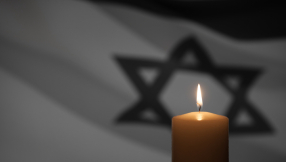
The Israel Director of the National Council of Jewish Women of America (the oldest such organization in the USA) produced a memorial essay to the dead, widowed and orphaned of the October 7 2023 pogroms in Israel which was both heart-rending and hopeful.
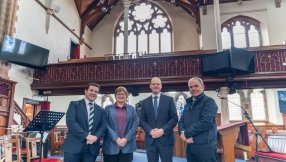
Simultaneously, the most prominent Anglican interfaith advisers in this country sent out a joint document and press release in support of the Jewish communities which went beyond any previous statement made by the C of E.
The document included criticism of their own General Synod, as they decried the welling up of antisemitic discourse and deeds in this country, which have now become a flood sweeping through our streets and institutions.
This week’s Torah portion (Genesis 6:9-11:32) is also about a Flood, Noah’s Ark, followed by the rainbow and the Tower of Babel. The story concerns one family saving humanity through the skin of their teeth. Humanity then tries to out maneuver G-d himself through building the Tower of Babel.
The Haftorah (Isaiah 54-55:5) builds on this Flood episode: ‘For these are to Me the waters of Noah (Isaiah 54: 9).’ Humanity has the infinite capacity to save the world, or to destroy it. It also has the capacity to see the truth, or to miss the truth entirely.
Noah’s generation didn’t learn their lesson. They followed the Flood by building the Tower of Babel, where people would have to speak in ‘one tongue and common purpose (Genesis 11:1).’ Disparate approaches would be forced into a single cage. There would be no room for diversity or dissent, and - as in our own day - the loudest voices would inevitably reign supreme and smash the quiet.
Unity of purpose is fine as long as it doesn’t become a strait-jacket forced on the weak or unwilling by evil schemers such as Nimrod. The parallels with the global situation today are startling.
But two other things happened this week, in addition to the two statements made on October 7th. This week, outside my shul, I bumped into my friend, the widow of the first person murdered in this country for being an observant Jew who kept Jewish Law.
Last time I encountered her was a year ago at the shiva for her husband, also held at my shul. A year ago was a time to mourn; two days ago it was a time for joy, as she attended a wedding at my shul.
I told her the truth - she looked radiant. What an example to us all. Possessed of great emunah (faith) and having experienced the love of our community, this woman was serene as I had never seen her. She even asked after my own health. I felt I had encountered my own rainbow.
And then our Anglican Jewish Dialogue Group, founded ten years ago by Rowan Williams and myself to counter antisemitic language rampant in the Church of England, made a decision.
Starting at our next zoom meeting - hosted by one of the signatories to the call to action made by the inter faith advisors - we will start reading one of the most seminal, radical and contemporary works on Judaism of the 21st century.
For this is part of the statement made by the Anglican Inter faith advisors:
‘We stand with Jewish communities in England;
‘We regret language that erases Jewish peoplehood;
‘We call on the Church of England;
‘We call upon political leaders, Church institutions, and citizens across England to join us in resisting the current drift in our national life towards increasing antisemitism.’
The relationship between the Church and the political life of this country is historic and unique. Therefore, it is right for the Church to take a lead in the call to stem the flood of hatred which has overwhelmed us and continues to do so.
But what is this book that might help us understand what Jews and Judaism are all about? 43 years ago, a shy introverted graduate of Gateshead Yeshiva, in the freezing north-East of England, taught me Jewish philosophy at Orthodox religious seminary in Jerusalem.
Now, Rabbi Dr Nathan Lopez Cardozo, originally from a small town in Holland, has been stunning Jews from all walks of life, including a fair number of highly respected rabbinic figures in Israel and the USA. He has persuaded them to reconsider how they interpret some of their most cherished beliefs. He also has some followers who aren’t Jewish but who want to learn more.
Here are some of the comments made about Jewish Law as Rebellion, written in 2018.
Chief Rabbi Jonathan Sacks said that Rabbi Cardozo: ‘Has written a challenging, even provocative book, inviting us to restore the iconoclasm with which Judaism was born as a religion of protest against the status quo - a new chapter in one of the great Jewish traditions: the dignity of dissent.’
Former Archbishop of Canterbury and co-chair of our dialogue group, Dr Rowan Williams, stated: ‘What this exceptional book offers is a rationale for halakhic practice as a discipline of resistance.’
But my favourite opinion comes from journalist Melanie Phillips: ‘Rabbi Cardozo is an independent thinker who reframes conventional pieties with startling clarity. He targets a religious establishment whose conformism has robbed Orthodoxy of meaning. In reminding us that Judaism produced the world’s first rebellious religious text, this book is itself a much-needed protest against rabbinic mediocrity and spiritual decline.’ Ouch!
I first read this book as a guest of Rabbi Cardozo’s daughter and son-in-law, when they invited me at Shavuot (Pentecost) 2018 to be scholar-in-residence and guest speaker at their shul in South Manchester. At the time they were unaware of my earlier connection with Rabbi Cardozo. But I devoured the book in one sitting.
Incidentally, hero worship is not an option. Rabbi Cardozo’s daughter and son-in-law made it clear that they do not agree with everything stated by Rabbi Cardozo!
I arranged to meet Rabbi Cardozo himself again for the first time in 40 years on one of my recent war-time visits to my family in Israel. Physically he hadn’t changed much and on fundamentals was actually, in my view, quite conservative. If he is radical, it is not for the sake of being radical. It’s all well thought out. I wrote an article about this encounter for Christian Today, as well as reviewing his later books on Genesis, Exodus, Leviticus and Numbers.
However, Jewish law has always been misunderstood, by many Jews, as well as by Christians. And now is the time to reclaim this core aspect of Jewish teaching, without which Judaism would simply cease to be - that Jews cannot live by Torah (Bible) alone, but by interpretations, and rabbinic principles for life, which is what Halakha (Jewish Law) is all about.
And, so, spurred on by support from unexpected quarters and finding hope in hidden corners, let us hope that this New Year of 5787 resets the trajectory as it only takes one or two individuals and tiny baby steps to make a huge difference.