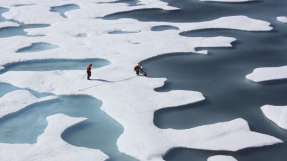
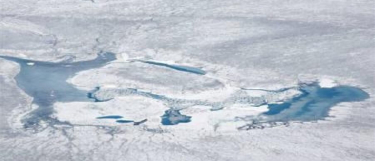
People already know that global warming triggered by man-made climate change is causing massive ice sheets in Greenland to melt, which in turn leads to the alarming rise of global sea levels.
Even worse than that, a team of international scientists recently found out that climate change has been hurting the world's biggest island more than previously imagined.
In their findings published last week on the scientific journal "Nature," the research team revealed that aside from melting ice sheets, climate change is also causing sponge-like snow on top of Greenland's ice, known as "firn," to lose its capability to absorb melted snow called meltwater.
Normally, the firn traps and stores water from the melting ice sheets, preventing it from running off into the ocean and thereby helping limit sea level rise. Earlier studies had indicated that the firn was relatively unaffected by global warming.
After Greenland experienced intensely warm summers in 2010 and 2011, however, the sponge-like snow was found to have been denser and less porous, thereby making it lose its absorptive capacity.
What exactly changed? The research team observed that the greater amount of meltwater from the earlier warmer summers caused the firn's pores to be filled up and hardened into a layer of ice that can no longer be penetrated by more meltwater.
Instead of being absorbed by the firn, the meltwater "drained along the ice sheet surface toward the ocean," further contributing to the rise in sea levels around the world.
In an interview with The Huffington Post, study author William Colgan from the York University, explained that his team's findings "overturned the idea that firn can behave as a nearly bottomless sponge to absorb meltwater."
"Instead, we found that the meltwater storage capacity of the firn could be capped off relatively quickly," the researcher said.
Lead researcher Horst Machguth from the Geological Survey of Denmark and Greenland meanwhile said that the study showed how the scientific community has yet to uncover all the adverse effects of climate change to our planet.
"Basically our research shows that the firn reacts fast to a changing climate," he told The Huffington Post.