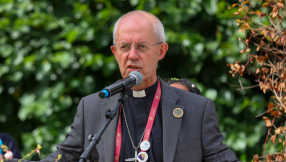
It doesn't matter whether you are a monarchist or republican, King Charles' coronation was a spectacle. Australian musician, Nick Cave, who attended the service summed it up well, observing "the deeply eccentric nature of the whole affair that so perfectly reflects the unique weirdness of Britain itself."
And one aspect of the coronation service that highlighted this was the concept of leadership through servanthood. To our modern world this seems like an oxymoron: two concepts, such as leading and serving, that seem to be opposite, yet work together in conjunction.
The church service emphasized this theme right from the start. A young choirboy welcomed the King "in the name of the King of Kings". Charles replied with a statement rich in theological significance, "In His name and after His example, I come not to be served but to serve."
Leadership
What does this mean? And how can the new King Charles, Head of the Commonwealth, be a servant? The church ceremony's rites and rituals extend back to the first coronation in 1066. However, the theme of servant leadership goes back further. It is founded on Biblical principles, the humility of Christ.
Strong / Weak
Many thought that the Christ/Messiah was meant to be a mighty military leader. The Old Testament is full of passages that point to a Messiah that is a strong King. Psalm 2 shows this mighty God responding to the treason from the opposing nations, "The One enthroned in heaven laughs; the Lord scoffs at them."
However, the Bible also has reference to the Messiah being a "suffering servant". Isaiah chapter 53 explains that this King will be "despised and rejected by mankind, a man of suffering, and familiar with pain."
Jesus brings these two concepts together explaining that He was the King that came not to be served but to serve. In Mark chapter 10 verse 45 Jesus responds to the disciples' poor view of leadership being just about power and privilege. He corrects them by explaining that He "gives His life as a ransom for many."
Serving
It is in this quotation we see a seismic shift in the way leadership is viewed within the culture and church. It isn't about sitting in the seats of honour up the front. Here, Jesus as the Creator and "Son of Man" explains that his example of leadership is seen in His sacrificial death on behalf of His people: His death brings us life.
We deserve death because we ignore the King; however, He takes our punishment and gives us blessings. He leads by saving His people.
Regardless of how this is worked out in King Charles' life, it is Jesus that is the archetype. He is the one Charles referred to in that quotation at the start of the ceremony. It is Jesus that Charles needs to look to in order to keep this pledge.
And it is Jesus who we look to, finding not only our example of leadership through loving others, but also finding a King to whom we should declare our allegiance.