Israel: Netanyahu hints at early election as ministers revolt

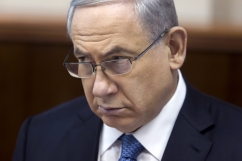
Israeli Prime Minister Benjamin Netanyahu, enmeshed in a cabinet crisis, said on Monday he would call an early national election unless rebellious ministers stopped attacking government policies.

His coalition, dominated by the right-wing, is split on a range of issues, including the 2015 budget, high living costs, policy towards the Palestinians and a Jewish nation-state bill that critics say discriminates against Israel's Arab minority.

The divisions have prompted speculation that Netanyahu will bring forward an election that is not scheduled until 2017.

In public remarks to members of his Likud party, Netanyahu gave his strongest indication yet that an early ballot could be in the offing.

"I have not enjoyed the fulfillment of even the most fundamental obligation - the loyalty and responsibility of ministers to the government in which they serve," he said.

"I demand these ministers stop their undermining, stop the attacks," Netanyahu added.

"I demand that they close ranks behind the proper policy for leading the nation, for its security, economy and lowering the cost of living, in every aspect. If they agree to do so, we can continue to work together. If they refuse, we will draw conclusions, and go to the voters."

Netanyahu was due to meet later on Monday and on Tuesday with two of his fiercest cabinet critics - Finance Minister Yair Lapid, who has been sparring with the prime minister over the 2015 state budget, and Justice Minister Tzipi Livni.

Livni has been highly critical of the Jewish nation-state legislation, which won cabinet approval over her objections a week ago, but has not yet been brought before parliament.

An opinion poll published by the left-leaning Haaretz newspaper on Sunday showed that although Netanyahu's popularity was declining, he was still very likely to win a fourth term as prime minister if an election were held today.

The poll showed Netanyahu's approval rating had slipped to 35 per cent, compared with 42 per cent at the end of the July-August war against Hamas in the Gaza Strip, but he still led the race against other potential contenders.

The last parliamentary election was held in January 2013, with Netanyahu then taking two months to piece together a five-party coalition government.


related articles
Timeline: How tension in Jerusalem led to synagogue attack

Timeline: How tension in Jerusalem led to synagogue attack

Israel-Palestine: it\'s not a religious conflict, says Amos Trust
Israel-Palestine: it's not a religious conflict, says Amos Trust

Israel-Palestine: it's not a religious conflict, says Amos Trust

Jerusalem attacks: If there is not reconciliation, there will be mutual destruction

Jerusalem attacks: If there is not reconciliation, there will be mutual destruction

Israel rejects EU states\' appeal over razing militant homes
Israel rejects EU states' appeal over razing militant homes

Israel rejects EU states' appeal over razing militant homes

Controversial Jewish nation-state blll clears Israeli cabinet

Controversial Jewish nation-state blll clears Israeli cabinet

Britain is reviewing Israel arms export licences

Britain is reviewing Israel arms export licences

Israeli foreign minister says Arabs should be paid to leave

Israeli foreign minister says Arabs should be paid to leave

News
Active faith linked to happier marriages and lower divorce rates, study finds

People who regularly attend church are more likely to report happy marriages, according to a new report examining the relationship between faith and family life.

Indian churches fearing anti-conversion laws tell non-Christians: enter at your own risk

Churches in Dhamtari, a town in the central Indian state of Chhattisgarh, have put up notices warning non-Christians that they enter at their own risk, weeks after a law against religious conversion came into force in the state.

£1k bursaries to help churches develop youth and community mentoring programmes

Churches across the UK are being offered bursaries to help them establish mentoring programmes aimed at supporting young people and others in their communities.

World Evangelical Alliance celebrates 180th anniversary

The World Evangelical Alliance (WEA) has held an online celebration to mark its 180th anniversary. Hundreds of people from more than 22 countries attended, and the event was rebroadcast to accommodate different time zones.