Fear of Islamophobia led to complaints about the Islamic society at a top London university being ignored, an inquiry has found.
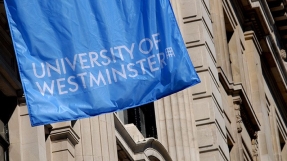
According to the Guardian, an independent inquiry found the Islamic society at Westminster University, which was attended by the Islamic State militant known as 'Jihadi John', to be dominated by ultra-conservative male believers who refused to speak with female Muslim staff members.
The report found that despite the quantity of complaints, including from some other Muslims, staff and university societies downplayed them for fear of being accused of intolerance. It said that university officials implicitly tolerated "sometimes hostile or intimidatory" attitudes to women on campus due to fear of accusations of Islamophobia.
The society's members acted as "apostles of a self-contained faith, concerned very largely with matters of religious orthodoxy and perceived heresy," according to the inquiry panel, which included historian Lord Kenneth Morgan and Fiyaz Mughal, a former adviser to Nick Clegg on interfaith matters.
Members of the Islamic society committee would refuse to communicate with female Muslim staff, instead forcing them to engage through male colleagues, the inquiry was told.
The report was commissioned in the wake of the discovery in February that 'Jihadi John' was Mohammed Emwazi, a graduate of Westminster University.
The report looked into the institution's balance between free speech and diversity. It was released over a week ago, but has received no publicity by the university and remains on a back page of its website.
Mughal shared his fears that the society, while not necessarily extremist, was not serving its members well.
"It's not a breeding ground for extremism, but it's a breeding ground for very ultra-conservative views," he said. "The question has to be asked, in a modern pluralistic society where information is changing the way we think rapidly, how is that healthy and how will those students be able to relate in the world we are in?"
He said that the University of Westminster was working hard to strike the balance between freedom of speech and diversity in its community, which counts more than 150 nationalities among its 20,000 students. He also said that the university had made mistakes, including allowing the "far too divisive" Sheik Haitham al-Haddad to speak.
Al-Haddad is an preacher who has purportedly described homosexuality as a scourge and criminal, and has spoken at the Islamic society in the past. In 2013 he addressed the student society with a message of hope for future Islamic dominance: "Once we as Muslims become one of the superpowers of the world, justice will prevail. Everyone will enjoy the benefits of Islam," he reportedly said.
New regulations have come into force today under the Home Office's Prevent anti-extremism programme which require higher education institutions to stop the radicalisation of students.
Westminster University said that it has become more stringent in determining which external speakers are allowed to speak and will work to promote respect within its student body.
The Islamic society did not comment on the report.