
|PIC1|Many Iranian Christians are refusing to accept their country’s presidential election results that claim hardline incumbent Mahmoud Ahmadinejad the winner, according to a Christian persecution watchdog.
Daryush, an Iranian Christian whose name has been changed to protect his identity, told Open Doors USA that the majority of people he spoke to “consider the elections a fraud and don’t accept the results at all”.
Even many people in Shahe Cheragh, a predominantly religious and conservative district of the southwest city of Shiraz, voted for reformist and more liberal candidate Mirhossein Mousavi.
Daryush says many people, Muslims and Christians alike, have been turned off by the election results, accusing it of being rigged and vowing to never participate in an election again because “it was a total fraud”.
Besides Daryush, Open Doors probed deeper and asked 28 other Christians from Tehran, Shiraz and Isfahan, all of whom said they voted for Mousavi, who had promised more religious freedom during his campaign.
Since the announcement of the results, the streets of Tehran and elsewhere have been filled with pro-Mousavi demonstrators. On Tuesday, thousands of pro-reform protesters marched for the second straight day in the Iranian capital. A day earlier, hundreds of thousands of Mousavi supporters had demonstrated in the central streets of Tehran.
Mousavi himself has proclaimed he won the presidential election and is demanding that the government annul Ahmadinejad’s victory and organise a new election.
On Monday, Supreme Leader Ayatollah Ali Khamenei, who is more influential than the Iranian president, said the government will investigate the election. However, his announcement failed to assure Mousavi supporters, who engaged in a massive rally afterwards.
In districts in Shiraz, young people are reportedly being arrested and beaten for denouncing Ahmadinejad’s victory.
“A friend who lives near the university and student dorms told me she heard screaming, shouting and gunfire in the early hours of the morning,” Daryush said.
“The predominately young demonstrators are calling Ahmadinejad a dictator and yell chants like ‘Ma dolate zoor nemikhaim’ meaning ‘we don’t want a government of force’.
“They also yell at the security forces and call them traitors and vote stealers. A friend said that within the security forces are pro-Mousavi followers, saying ‘beechareh shodim!’ or ‘we are without hope'.”
Some Iranians had considered Iran to be a limited democracy before the election, Daryush said. Although all the candidates were hand picked by the regime, some Iranians felt they could at least choose among them, the Iranian Christian explained.
But this election now has some Iranians lamenting that there is “no democracy at all … we have an Islamic dictatorship”.
In the United States, President Obama has expressed concern about the election results but has refrained from making any strong statements about it being a fraud. He said Tuesday that “it’s not productive, given the history of US-Iranian relations” for the US “to be seen as meddling” in Iranian affairs.
The US and Iran have had no diplomatic relations for 30 years.
Obama voiced hope, however, that dissatisfied Iranians will help their country become more open to debate and democracy.
“We need to continue to pray for the situation in Iran, especially for the Christians caught in the crossfire,” says Open Doors USA president and CEO Carl Moeller. “This could be a pivotal point in the history of Iran and the future of believers who live there.”
-

New pilgrimage route follows in the footsteps of the Manx Bible translators
-

Survey finds Gen Z most likely to identify as religious
-

Christian social worker returns to Court of Appeal in dispute over withdrawn job offer
-
Australia's anti-therapy laws harm the most vulnerable - Britain should not copy them
News
-

Edinburgh University ends divinity programmes as theology faces a changing future
-
What links Tommy Robinson, Andrew Tate and the CofE’s newest diocesan bishop?
-

Third of young people now turning to AI for friendship, research finds
-

Why the Archbishop of Canterbury’s award controversy matters
-

Catholicism in France has 'collapsed'
-

From Genesis to Revelation: The ambitious AI project turning the Bible into music
Most Popular
News

Why New Age spirituality isn’t neutral
The problem is not the recognition that there is more to life than what we can see; Christianity agrees that there is. The question is where we go looking for answers.
More than one in four US Protestant churchgoers believe some biblical truths become outdated
US Protestant churchgoers who hold evangelical beliefs are more likely than their non-evangelical counterparts to express confidence in the Bible and its continuing authority, according to new research from Lifeway Research.

Cost of living crisis is ‘busting family budgets and increasing social isolation for children’ - report
Rising living costs are forcing many UK parents to reduce activities for their children and, in some cases, use child benefits to cover household essentials, according to new research from Child Poverty Action Group (CPAG).
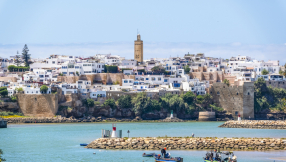
Religious freedom in Morocco is ‘substantively limited’, report warns
A new report has questioned Morocco’s claims to religious tolerance, arguing that laws relating to Ramadan observance, burial and conversion continue to limit freedom of religion despite constitutional protections.








