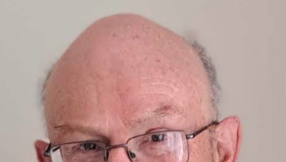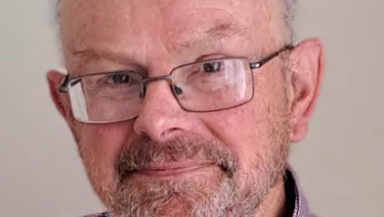
Jewish academic and Hebrew scholar Irene Lancaster remembers her dear friend and Broughton Park Jewish Christian Dialogue Group co-founder, Canon Andrew Shanks.
Recently, the co-founder of the Broughton Park Jewish Christian Dialogue Group, Canon Andrew Shanks, died, and last week we held a special commemorative zoom meeting for him.
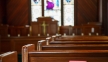
Former Bishop of Manchester, Nigel McCulloch, wrote to say how proud he was of appointing Andrew as Canon Theologian of Manchester Cathedral - a post he held from 2004-14.
Andrew saw his role as being to shake things up in the C of E, to shock people out of their apathy and to initiate the new.
Not surprisingly, therefore, he often spoke to me about Yom Kippur, the Jewish Day of Atonement, which is just round the corner, one year after the Heaton Park Shul terrorism attack, adjacent to Andrew’s former home.
Andrew came to see me in 2004, soon after he arrived in Manchester, and suggested some fruitful dialogue on Judaism and Christianity. Thus the birth of our group, encouraged by Bishop Nigel. We are now in our 18th year.
Andrew’s first act of courage was to invite me in 2006 to speak in the Cathedral on the 350th anniversary of the return of the Jews to England in 1656.
He prefaced my talk by expressing his own anguish at the recent decision of the 2006 York Anglican Synod to boycott an Israeli business, just as Hamas had taken hold in Gaza!
‘How can the Jewish community feel welcome in England,’ he asked, ‘if the Synod in York, with all its negative anti-Jewish history, commits blatantly prejudicial acts against the Jewish homeland?’
But he himself also gave a talk on the need for the Anglican Communion to inaugurate an annual communal service of atonement and repentance, just like the Jewish Yom Kippur. This demonstrated real out-of-the box thinking on a scale not yet seen in the C of E.
Later, the Church wanted to adopt the Jewish idea of ‘covenant’, a more flexible notion than ‘contract’, to depict the fairly loose relationship between its different constitutional bodies.
But towards the end of his stay here in Manchester, Andrew also visited us for the annual Purim service.
Purim seems, on the face of it, to be the opposite of Yom Kippur in every way. G-d is never mentioned. A woman (Esther) saves the day and the service is loud and playful, with people wearing disguises and generally making merry.
However Kippur and Purim have the same Hebrew root and this is deliberate. For in the World to Come, there will be no need for atonement and fasting. Only the gaiety of Purim will survive.
Andrew stated that the Church could learn much from Purim and seemed almost wistful as he left us en route for his new home in York!
Andrew was not a crank and certainly not a prospective convert to Judaism.
As his teacher, Rowan Williams, made clear at our commemorative meeting last week, he first encountered Andrew as an undergraduate 50 years ago, and Andrew had taught him much. Andrew’s input to the Church in Manchester and especially to our dialogue group did much to foster more than good relations - they fostered love.
When I lived in Israel from 2006-8 Andrew provided much positive information about philosemitic theologian, James Parkes, who was being celebrated over there and whom he had known.
Recently, when Andrew was writing his book on Jewish poet and 1966 Nobel laureate Nelly Sacks, he often asked me for an explanation of a German word in context, or a Jewish concept as interpreted by her.
It’s this give and take between religions - not standing on ceremony, or taking up sides, which Andrew fostered, and (this also being the Jewish way), Andrew found a willing partner in his many Jewish friends.
At the end of the day, Yom Kippur is not simply about atonement, forgiveness, or repentance. It’s about finding our unique voice -a voice that calls to G-d through our relationship with our fellow human beings. G-d doesn’t want our fasts if we don’t also examine our behaviour towards each other.
Andrew understood this about atonement and he came to admire the Orthodox Jewish community among whom he lived. Many of his books have been reviewed for Christian Today. They weren’t easy to review, but worthwhile all the same.
It’s rare to encounter an Anglican priest who grasped aspects of Judaism in the way Andrew did. But as we approach this year’s Yom Kippur (starting Sunday night), let’s remember Andrew’s brave attempt to help the Church overcome some of its prejudices by taking on some of the communal aspects of the Jewish Day of Atonement.