There are many things we take for granted in a rich western democracy – beyond the obvious things, like water, education and shoes.
Perhaps I was naive, but before I visited Haiti it hadn't occurred to me that elections were among them.
Whether it's the pantomime being played out between Trump and Clinton across the pond or the horror and vitriol which spewed out after the UK opted to leave the EU, recent votes have left me cynical and depressed more than anything else.
In Haiti, it's a different story altogether. The poorest country in the western hemisphere is still desperately in need of basic infrastructure. Getting on for seven years after the devastating earthquake that levelled much of the capital and affected 3 million people, much of the country still barely functions.
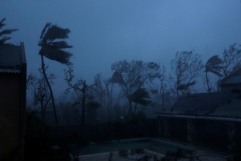
Haiti has had an 'interim government' since February 2016; elections were postponed in January after allegations of fraud and violent protests. It's been due to go to the polls on a number of occasions this year. They were scheduled again in April, and delayed again, this time until October 9. Thanks to Hurricane Matthew, which killed at least 300 people and damaged swathes of homes in Southern Haiti, they've been postponed again.
The interim government, headed up by Jocelerme Privert, has been running the country since the term of the last president, Michel Martelly, ended in February.
Martelly's supporters, and his preferred candidate, Jovenel Moïse, have claimed Privert is dragging his feet so his allies can cling on to power. Claims of corruption are rife, and a new election council is now investigating the fraud claims and deciding which of the 50-plus electoral candidates should take part. The results of the preliminary round have been contested.
In Port au Prince, scruffy election posters have been up since the beginning of the year. No two are the same. Around every corner there is a different face, a different slogan.
The delay has a double impact for Haiti. First, the violence. In Port au Prince the streets erupted in protest when the April deadline was missed. "People are expressing anger, their lack of satisfaction," Ricot St Paulin, programme communications manager for Compassion in Haiti, told me at the time. "Things are happening, sometimes violence follows.
"I am really worried."
Second, and perhaps more significantly, with only an interim president and an interim government, any kind of sustainable development is virtually impossible.
Think of any teacher or NHS worker in Britain who will talk about the problems of short-termism – such as introducing a new syllabus every couple of years – and then imagine only an interim government in charge, and how that kind of institutional paralysis would be magnified.
This matters because in Haiti, getting things done is literally the difference between people living and dying.
"Every time you can't have good elections, you're going to have instability," says Ricot. "Right now, reports say Haitians at risk of hunger, will increase by 3 million."
This would be a significant number anywhere, but in Haiti, there are already a lot of hungry people. Food insecurity causes people to kill, to kidnap, to do anything.
The country is still feeling the aftershocks of an earthquake which killed anywhere between 100,000 and 300,000 people six years ago – the imprecision is a symptom of the chaotic state of the country's governance.
Rebuilding has been painfully slow. On the ground, it's as if nothing has moved. In the years which followed, a cholera outbreak, brought to the country by UN peacekeepers, and this week's hurricane have added to Haiti's woes.
Why so slow?
"I think corruption is part of it," says Ricot. "But also, the international community have a significant role in the slow motion of things.
"It's obvious that it's not only the government, but also the international community. I don't see a strong will from them to make things happen, to partner with the Haitian government, and to advance things."
It's still unknown when the elections will take place. Haitians will be forgiven for not fully believing that they ever will.
"It's a really threatening, challenging situation," says Ricot. "We need stable government, a democratically elected president to address things."
"We thought we would have the opportunity to rebuild. It was not the case."
Elections in the West are often seen as a necessary evil, a debt grudgingly paid to democracy. No matter how much their significance is talked up by the warring parties, whoever wins, the rubbish is still removed, the lights stay on and the hospitals and schools stay open.
In Haiti I saw a country where that wasn't true. Elections mean they might have a future. It's literally a matter of life and death.
Ruth Mawhinney travelled to Haiti with the charity Compassion, which sponsors almost 90,000 of the poorest children in the country. For more information or to sponsor a child, visit their website.