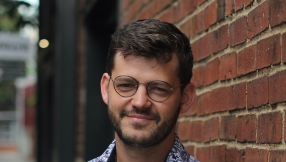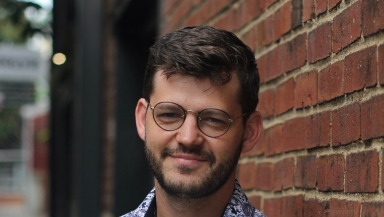
Micah Fiechter is the founder of the Music Bible, a project that has used AI to convert the entire Bible into music form across a range of genres. Christian Today spoke to Micah to find out more about what inspired him to start the project and the impact he hopes it will have.
CT: How did this project go from you helping your dad out one Sunday to a team of 70 people?
MF: I think the way God has designed me is to be able to really build and inspire teams towards specific initiatives and goals. In college, I built a radio drama organization at Moody Bible Institute and that ended up having over 100 voice actors and actresses, and an 18-person executive staff.
Building teams is something that I just absolutely love to do, and I also love working with people from around the world. I love the perspective that they bring and just the different eye to things.
But the other piece to it is my ambition to do musical Bibles in every major genre. We will never do interpretation or repetition, we simply want to use AI for the sole purpose of rendering the Word of God as it is written. That, for me, is super important.
And as we look at doing other languages, it's really important to me that we're not just in the studio producing tracks in Mandarin, or in Urdu, or in Arabic. We're actually on the ground in those regions with the people that are living and breathing in that air, so that they can dictate the sound and what it should feel like.
CT: So the 70 people are not all in Nashville?
MF: They're spread out across 11 countries. We are finding people on the ground and local pastors and their congregations there and getting them involved.
By the end of next year, I would like to have the nine additional most spoken languages finished as musical Bibles.
So that will give the Bible in song for the very first time to 69% of the global population, 5.7 billion people, by the end of 2027.
CT: What's your favourite genre so far and why?
MF: I just hop around and go back and forth, but my most consistent genre is hip-hop. I really enjoy the hip-hop version because it's just very, very fun to me. But I will also say the jazz music Bible, for me, really makes passages that I've read a hundred times come alive differently. If you go to John 11, where Jesus is raising Lazarus from the dead, and you listen to that passage in jazz, it's like a symphony. It's so cool. That's probably my favourite song in the entire collection.
CT: You've also said that you hope the Music Bible will help people to memorize scripture. How important do you think that is for Christians?
MF: I don't think we can put a value on it - it's so important. It's critical. There's so much power in the Word of God, and when we have that actually hidden and imprinted in our hearts to the point where we can draw on it when we need it, it's preventative care in a way. It's hope and it's life.
I think music could arguably be the most memorisable, contagious medium for communication that is currently available. We're taking that powerful medium and delivering the power of the text of Scripture for the world to experience.
One mother reached out to me to say that her 10-year-old daughter wasn’t sleeping well but with the Music Bible she's been able to fall asleep. Not only that but just by listening, she's memorized over 150 verses of the Bible. I had another mum say that she and her daughter are going through the Book of James and memorizing it together just by listening to it, and they've memorized the first three chapters already.
So I think it hits people differently than a traditional audio Bible or simply reading it does.
CT: You've mentioned that you see this project as in some way continuing on the work of William Tyndale. What does Tyndale mean to you?
MF: I think William Tyndale is one of the most inspirational figures of the last thousand years for me. Around 500 years ago, English speakers could not read the Bible. They did not have the Bible in their language to read it and access it. Tyndale took a new technology - the Gutenberg printing press - and saw it as a means to deliver the Word of God.
A lot of people didn't like it, but what William Tyndale saw was the potential to give access to the Word of God in a revolutionary way. That was in 1526, and he ended up giving his life for that work.
So we have the spoken, oral way to experience the Bible. There is the written text and sign language, and now 500 years on from Tyndale, we have the Bible in music almost like a fourth medium for the entirety of Scripture - and not a paraphrase but word for word.
I think that William Tyndale made and laid the groundwork with utilizing a revolutionary technology for the glory of God, and using the printing press for God and using it for good. That's what we're committed to and that's why we are using AI in this narrow sense - never for interpretation, but in this narrow sense for Bible distribution.
CT: Coming to AI, can you give an idea of how your team and AI are working together on this. So, for example, was the AI coming out with real bangers every time? Did it need tweaks ever, or were there times when the AI came up with a really terrible song and your team had to really work on it?
MF: That's why we need such a big team. You know, when we're talking about the entire Bible, it's 700,000 words. So we have to break it up into 11-verse songs and 2,750 songs per style of music. Every single song is being reviewed and looked at and evaluated and post-produced by human verification through our team.
We will never push a button and go “generate a Bible song” and just funnel that through the system and then out pops a musical Bible. It's a lot more intimate than that. We have a whole team dedicated to taking a passage, figuring out stylistically how to make it fit a certain genre. That then gets sent over to our review team that looks at textual fidelity - and we're aiming for 100% fidelity to the text. They will also consider things like repetition or phonetic pronunciation, so for example, are we pronouncing Moses correctly? AI makes mistakes and even the production team could make mistakes. So we've got to have a second layer here.
After all of that, the song gets sent over to the post-production team, which starts time-stamping, fixing, and doing everything inside of the song, which then gets sent back to the review team. That process is a feedback loop until the song gets approved and signed off by management. It goes through all of that before it can come off the pipeline and onto the Music Bible app.
When people download the Music Bible app, we're aiming for 100% accuracy; that's our standard. If we ever deviate from that and it gets flagged, we pull it down within 24 hours and replace it.
CT: You're committed to doing the Bible word for word but it can be dark in places and perhaps not always suitable for children - for example, in the Old Testament there are passages dealing with rape. How did your team navigate issues like that?
MF: This is part of what it means for the Music Bible to be committed to never doing the work of interpretation. What we are doing is delivering the canon, the 66 books of the Bible, in music form but it is for families and individual users to make the judgement call themselves about which parts they listen to.
In the app, we have playlists, for example a gospel playlist or a children's sleep medley. These are curated in such a way that certain content is filtered out for kids.
Where do we draw the line at Music Bible? If we are going to pull certain passages from our platform, I think that in and of itself becomes interpretation, and we're not going to do that.
Something we are exploring for the future is a children's version of Music Bible based on an existing mainline edition of a children's Bible.
Indeed, we are excited and eager to have conversations with other mainline translations because the Music Bible at the moment is the New American Standard Bible, word for word. It's a seminal, scholar-vetted, time-tested translation. NASB is wonderful and we stand by it. But we also want to meet people where they are in terms of other mainline translations and we hope to partner with some of these in the future.
CT: Thinking briefly about AI for Christians, do you think there's a risk that AI could potentially crowd out the Holy Spirit? For example, how would you feel about a pastor delivering a sermon which was fully created by AI?
MF: The conversation on AI and ethics is super important. I personally, at this moment in time, do not support the use of AI for interpreting Scripture and I don't use it that way.
I think there is something to be said about using it to compile research and data to help you as you are studying, but the actual content creation of it in the sense of creating theological words, I don't think that’s something I would support. My position could change potentially, but at this point, I don't think that's something I would support.
CT: Is there anything else that you really want to share about this project, or anything that you really want people to know?
MF: There's so much fear and so much unknown about AI today, so it's one of those things that could so easily be a turnoff - AI and the Bible. But this app is a great example of AI being used for good.
It's free and you don't even have to create an account. You can immediately start listening to Scripture in song format in the genre that you like. I especially recommend that users listen to whatever passage was just preached on Sunday, or their favourite chapter or verse of the Bible. That's a great starting place.
From a three year old child to someone with Alzheimer's in a nursing home, this is a revolutionary way to access Scripture and the potential is huge.