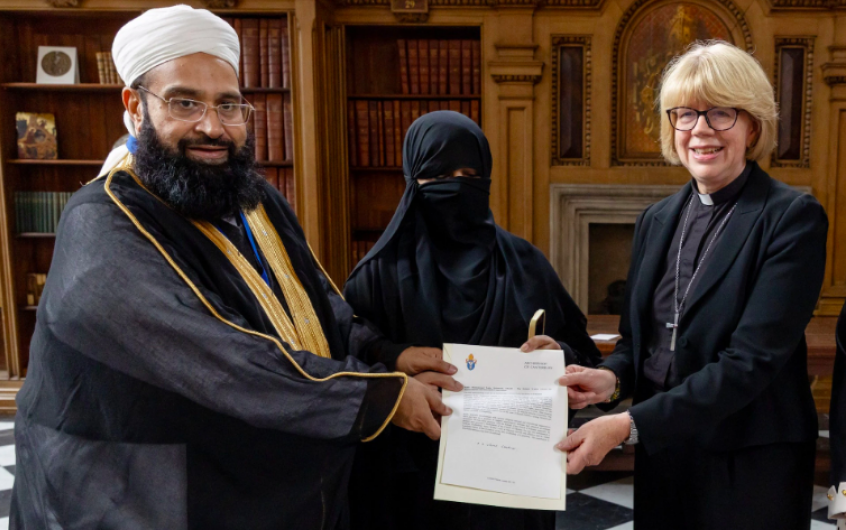
The Archbishop of Canterbury has withdrawn an award to a Muslim cleric who praised Osama Bin Laden.
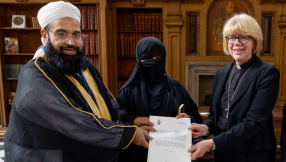
Hafiz Muhammad Tahir Mehmood Ashrafi was presented with the The Hubert Walter Award for Reconciliation and Interfaith Cooperation by Archbishop Sarah Mullally during a ceremony at her official London residence to mark the 25th anniversary of the 9/11 attacks last Friday.
Bin Laden founded the al-Qaeda terrorist group and orchestrated the 9/11 attacks on the Twin Towers in New York and other US sites, killing 2,977 people and injuring thousands more.
It was Dame Sarah's first time presenting the Lambeth awards since coming to office. It later emerged that Ashrafi had said in 2007 that Bin Laden should be given the title of Saifullah - or ‘Sword of God’ - prompting a strong backlash, including calls for the Archbishop's resignation.
In a statement announcing the withdrawal of Ashrafi's award, Lambeth Palace said it had been given to him in recognition of his "longstanding support for religious minorities in Pakistan, particularly the Christian community - support that is valued by many Christians in Pakistan including its Anglican Church".
The statement continued: "It is a longstanding principle of interfaith dialogue and co-operation that we must engage with one another across deeply-held differences, and that remains the case.
"However, previous comments made by Imam Ashrafi have come to light that have led Lambeth Palace to reconsider this award and we can now confirm today that the award has been withdrawn.
"We have contacted Imam Ashrafi to make him aware of this decision. We continue to pray for the Christian community in Pakistan, and for all those working for interfaith dialogue and harmony in Pakistan and around the world."
Reform leader Nigel Farage said the decision to award Ashrafi was "astonishing".
"Why on earth did the Archbishop of Canterbury give an award to a man who praised Osama bin Laden?" he said.
Former Bishop of Rochester, Mgr Michael Nazir-Ali, who was born in Pakistan, told Damian Thompson at The Spectator that Pakistani Christians now fear an intensification of persecution and that they will bear the brunt of a backlash.
Christian commentator Adrian Hilton said the Archbishop of Canterbury had "made a grave error" in failing to properly check Ashrafi and that the scandal was "catastrophic for the Archbishop of Canterbury, Lambeth Palace, and also for the Lambeth Awards, whose mission has been debased".
Conservative leader Kemi Badenoch called the decision to award Ashrafi "a significant lapse".
"Britain is a Christian country, yet this image is a sad reminder that if we do not conserve our own faith and traditions, nobody else will," she said.
"Yes, the church might have been ignorant of some facts, but the presence of a woman with a full face veil, covered head to toe, in an outfit widely known as a visible symbol of female oppression should have given pause for thought.
"Our Culture and Integration Commission was set up to end this sort of naive belief that all cultures are equal. No other party in British politics is doing this work to protect our culture."