Egypt may ban women from wearing Islamic face veils

Egypt could ban women from wearing the Muslim face veil in public places under draft legislation currently being written in the Muslim-majority country.

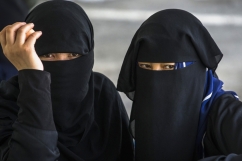
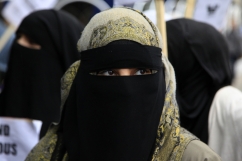
Many Egyptian Muslim women choose to wear the veil, or niqab, in public or in front of men. The proposed ban would be upheld in public places and government institutions, according to the Independent.

MP Amna Nosseir, professor of comparative jurisprudence at Al-Azhar University in Cairo, announced that the Egyptian Parliament was drafting the law on Monday. She said the niqab is non-Islamic in origin, instead claiming it has Jewish roots. It is not required by Sharia law, she added.

In an interview with satellite channel ONtv, she cited the Qur'an: "Say to the believing men that they should lower their gaze and guard their modesty: that will make for greater purity for them: And Allah is well acquainted with all that they do."

This shows that women are not required to wear the burqa, Nosseir said. "How did Islam impose the niqab if Muslims are asked in the Quran to lower their gaze?"

She told Gulf News that she had been saying the niqab is not an obligation for Muslim women for more than two decades, and said had been "harshly criticised" for her views.

"The niqab is not an Islamic duty," she insisted. "We seek to spread moderate Islam. Wearing the niqab in public has raised concerns in the Egyptian streets in view of the hard circumstances the country is undergoing."

However, Nosseir's colleague at Al-Azhar University, professor of religion and philosophy Fouad Abdel-Moneim, has condemned the government's plans.

"Communities are destroyed wherever immorailty spreads," he said. "Ban nudity instead of banning the niqab".

Monday's announcement follows restrictions placed on doctors and nurses studying at Cairo University from wearing the niqab in teaching hospitals and medical schools. Academic staff at the university are no longer allowed to wear the niqab in classrooms over fears it was leading to "poor communication" with students.


related articles
Rowan Williams: Fears about Muslim veil \'misplaced\'
Rowan Williams: Fears about Muslim veil 'misplaced'

Rowan Williams: Fears about Muslim veil 'misplaced'

China bans burqa in major Muslim city

China bans burqa in major Muslim city

UK mosques could be designed to be more \'quintessentially British\' says Muslim peer
UK mosques could be designed to be more 'quintessentially British' says Muslim peer

UK mosques could be designed to be more 'quintessentially British' says Muslim peer

Banning the veil: A triumph for women\'s freedom or state interference with religion?
Banning the veil: A triumph for women's freedom or state interference with religion?

Banning the veil: A triumph for women's freedom or state interference with religion?

News
Danny Kruger: Britain should be 'confidently Christian'

Reform MP Danny Kruger has spoken of the need for Britain to once more assert itself as a  country with a long and rich Christian Heritage.

400 girls 'missing' thanks to sex-selective abortions

Sex selective abortions appear to be taking place within the Indian community, data suggests.

Community pantries mark a million visits as new research highlights impact on food insecurity

Community pantries across the UK have recorded their one millionth visit, as new research suggests the membership-based food model is helping thousands of households reduce food insecurity, cut costs and prevent them from falling into extreme hardship.

Christmas was a mix of joy and hostility for Christians in India

India has witnessed a blend of joyful Christmas celebrations in many parts of the country, alongside reports of hate, hostility, and attacks on Christians this season, particularly in northern and central regions.