UK mosques could be designed to be more 'quintessentially British' says Muslim peer

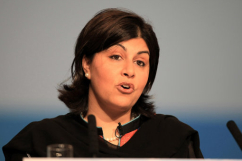
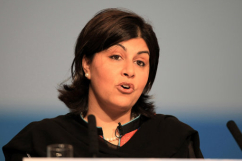
Mosques in the UK could be designed without minarets to look more "quintessentially British", according to former Conservative Party chairman Baroness Warsi.

Lady Warsi, the first Muslim woman to sit in the Cabinet, wants architects to design a new model of mosque to reflect Islam in the UK.

That could involve abandoning the minarets from which calls to prayer are issued, and even building mosques that look like churches.

"If the principal reason no longer exists, with someone having to physically go up to the minaret, should we take more local cultural reference points from this country instead?" she said in a speech at St Mary's University, Twickenham. 

Baroness Warsi, who is setting up a foundation to promote religious tolerance, said she wanted to start a national debate about places of worship in the 21st century. She is planning a design completion to be launched next year to come up with new plans for mosques.

The call for a new generation of mosques first emerged emerged in the Tablet, a Catholic magazine, following questions at the peer's inaugural lecture as Visiting Professor St Mary's University, Twickenham. Full details of the design competition are expected to be issued in the New Year.

In her speech, she explained: "Islam is different whenever and wherever it is found. If Islam always takes its cultural references from where it finds itself, British Islam must take cultural reference points from where it grows."

Part of this meant building quintessentially British mosques, Warsi said. She argued that minarets were not culturally necessary in modern Britain.

"There is no need for a minaret. There is no need for a mosque to look like it doesn't fit into its environment. It doesn't need to be like that. I would love for there to be English-designed mosques."

She added: "The phrase that I keep coming back to, which is rooted in Islamic thinking, is that Islam is like a river that takes the colour from the bed over which it flows, the bed being the country in which it is found.

"There has to be a debate about cultural reference points in religious buildings, how does it find its identity in the place in which it is built?"


Newsletter Stay up to date with Christian Today
related articles
International community must take action to protect minorities - Baroness Warsi

International community must take action to protect minorities - Baroness Warsi

Baroness Warsi\'s open letter to Pakistan
Baroness Warsi's open letter to Pakistan

Baroness Warsi's open letter to Pakistan

Baroness Warsi: religious freedom remains a 'personal priority'

Baroness Warsi: religious freedom remains a 'personal priority'

Baroness Warsi chairs first Religious Freedom Advisory Group

Baroness Warsi chairs first Religious Freedom Advisory Group

Baroness Warsi resigns over UK government\'s Gaza stance
Baroness Warsi resigns over UK government's Gaza stance

Baroness Warsi resigns over UK government's Gaza stance

Faith in government? Why religion needs a voice at Westminster

Faith in government? Why religion needs a voice at Westminster

News
A three day journey by canoe to receive life-saving treatment from Mercy Ships

Most Madagascans cannot afford surgery, even on the rare occasions its available.

Drought insurance helps Nepal families survive food crisis

An innovative drought insurance scheme has provided emergency support to hundreds of vulnerable farming families in western Nepal

Britain has become ‘dangerously complacent’ over family breakdown

Dr Harry Benson, Research Director at the Marriage Foundation, said the latest official data on families and households pointed to a “profound social change” that had received little public attention despite long-term consequences for family stability and child wellbeing.

Church of Scotland issues slavery apology

The Church of Scotland General Assembly said it was “grieved beyond telling” for the suffering inflicted.