Some parts of Scripture seem to speak straight to our hearts and minds. Others challenge us, because they don't seem to say what we'd expect them to say.
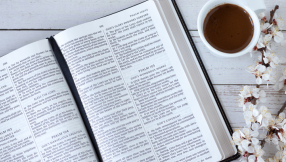
The book of Ecclesiastes is one example. It can be problematic for Christians, because it so often seems, well, sub-Christian. It has some wonderful poetry in it, and some wise advice: the Preacher's words about there being a season for everything, for instance (3: 1-8) have blessed and comforted many of us. However, it often seems rather cynical; it's a bit jaded and joyless. You really have to be in the mood.
There's perhaps nothing that shows this better than the Preacher's comments about death, in 9: 4-6:
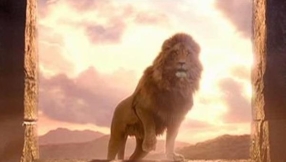
Anyone who is among the living has hope – even a live dog is better off than a dead lion!
For the living know that they will die,
but the dead know nothing;
they have no further reward,
and even their name is forgotten.
Their love, their hate
and their jealousy have long since vanished;
never again will they have a part
in anything that happens under the sun (NIV).
Again, it's wonderful poetry, but this is a world away from the Christian hope. We would be unwise to be too precise about what awaits us after death, but in Christian thinking it is a joyful completion and consummation of the life we live now. It is not less than we have now, neither is it an extension of the same: it is gloriously more.
One of the best-known poems of the 20th century is by Dylan Thomas. It is a villanelle, the most difficult of all poetic forms, with a highly complex rhyming scheme which makes it hypnoptic to hear. It begins: "Do not go gentle into that good night,/ Old age should burn and rage at close of day;/ Rage, rage against the dying of the light." It was written after the death of his father, and it is a passionate plea for life and a rejection of death, which is an end and an extinction: the "dying of the light" against which we should all burn and rage. The last of our possessions, life itself, is being taken from us: so, " Do not go gentle into that good night./ Rage, rage against the dying of the light."
If the vision of the Preacher in Ecclesiastes were true, that is exactly how we should die. And in our Western world, this is the view that is gaining ground. "Do not go gentle" is read at funerals, and Monty Python's Always look on the bright side of life, which includes the lines "For life is quite absurd/ And death's the final word" is sung at more funerals than The Lord's my Shepherd.
What does the Christian have to put against this bleak vision?
Norman Nicholson (1914-87) was a Christian poet who lived in Millom, on the Cumbrian coast, for amost all his life. In one of his best-known poems, Sea to the West, he wrote of how as a boy he would cycle to the shoreline and watch the sun setting over the sea. He ends it by writing of the "final stare" when he would look out again as an old man, "the sea to the west, the land darkening", and concludes: "Let my eyes at the last be blinded/ Not by the dark/ But by dazzle."
In 1 Corinthians 2: 9 Paul says, "No eye has seen, no ear has heard, and no mind has imagined what God has prepared for those who love him" (NLT). The world may believe in an eternal darkness, but Christians have an eternal hope.