Britons will be asked to vote "yes" if they want to stay in the European Union when a referendum is held in the next two years, the government said on Thursday.
The question they will be asked on the ballot paper will be: "Should the United Kingdom remain a member of the European Union?"
The wording is seen as significant because the "in" campaign will be able to brand itself as the "yes" campaign – perhaps casting itself in a more positive light than its opponents.
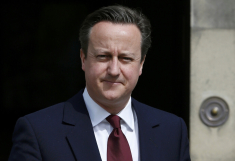
The government made the disclosure as it prepared to publish a law guaranteeing the referendum will be held before the end of 2017 and as Prime Minister David Cameron embarked on a two-day tour of European capitals to win support for his EU reform drive.
He has promised to reshape Britain's EU ties, reclaiming some powers from Brussels, before allowing Britons to vote on whether to stay or quit the bloc.
In last year's Scottish independence vote the pro-union campaign was described as too negative, partly because the phrasing of the referendum question meant voters had to say "no" to change.
Cameron has said he favours staying in a reformed EU, but will rule nothing out if he does not get the changes he wants.
"That Cameron is opting to give the pro-EU side the positive 'Yes' suggests strongly that his negotiations are so much fudge," Nigel Farage, the leader of the anti-EU UK Independence Party, complained in a statement.
"He has already decided which way he wants the answer to be given, without a single power repatriated."
A source in Cameron's office said the question was clear.
"It will be for voters to decide whether to stay or leave," said the source.
Cameron is due to meet Dutch Prime Minister Mark Rutte in The Hague and French President Francois Hollande in Paris on Thursday before heading to Warsaw and Berlin on Friday for talks with Polish Prime Minister Ewa Kopacz and German Chancellor Angela Merkel.
On Monday, the government said citizens of most other EU countries living in Britain would be excluded from voting in the referendum. It has also rejected calls for 16 and 17-year-olds, who could vote in the Scottish referendum, to take part in the EU ballot.