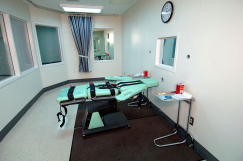
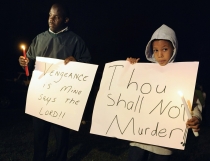
Two senior US bishops have launched a new challenge to capital punishment.
Cardinal Seán O'Malley and Archbishop Thomas Wenski, who both chair influential committees of the United States Conference of Catholic Bishops, said in their statement that progress has been made and some states have banned the death penalty.
"However, there is still a great deal of work to be done, and we must recommit ourselves to end this practice in our country," they said.
The states that have ceased the legal use of capital punishment include New York, New Jersey, New Mexico, Illinois, Connecticut, Maryland and Nebraska. Death sentences are at their lowest level since the reinstatement of the death penalty in 1976.
Their statement marked a decade of campaigning against the death penalty by Catholic bishops of the US.
In their statement 10 years ago, A Culture of Life and the Penalty of Death, the bishops urged a prudential examination of the use of the death penalty, with the aim of helping to build "a culture of life in which our nation will no longer try to teach that killing is wrong by killing those who kill".
They warned: "This cycle of violence diminishes all of us."
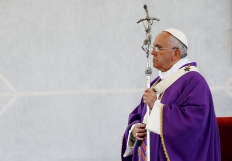
Cardinal O'Malley and Archbishop Wenski said: "We join our Holy Father, Pope Francis, in anticipation of the forthcoming Jubilee Year of Mercy, and renew our efforts in calling for the end of the use of the death penalty."
Earlier this year, Pope Francis said: "Today the death penalty is inadmissible, no matter how serious the crime committed. It is an offence against the inviolability of life and the dignity of the human person, one which contradicts God's plan for man and society and his merciful justice, and impedes the penalty from fulfilling any just objective. It does not render justice to the victims, but rather fosters vengeance."
The two US prelates said: "Our faith tradition offers a unique perspective on crime and punishment, one grounded in mercy and healing, not punishment for its own sake. No matter how heinous the crime, if society can protect itself without ending a human life, it should do so. Today, we have this capability.
"We are all sinners, but through the Father's loving mercy and Jesus' redeeming sacrifice upon the Cross, we have been offered the gift of life everlasting. The Lord never ceases his loving pursuit of us in our sin and brokenness, offering us the choice of life over death. The use of the death penalty cuts short any prospect for transforming the condemned person's soul in this life."
They said the Church's opposition to the death penalty should not be seen as indifference to the sinfulness of crime and attacks on human life, but as an affirmation of the sacredness of all life, even for those who have committed the most heinous of crimes.
They cited one clerical victim of violent crime, Archbishop Joseph Naumann of Kansas City, Kansas, who was murdered. Archbishop Naumann had said that the refusal of the death penalty is not a rejection of the horror of the crime but because "we refuse to imitate violent criminals".