Nearly 400 Church leaders and theologians have released a statement calling for the end of the death penalty, timed to coincide with Holy Week.
Among the signatories are Sojourners founder Rev Jim Wallis, Shane Claiborne, evangelical ethicist David Gushee, President of the National Latino Evangelical Coalition, Rev Gabriel Salguero, and author and activist Lynne Hybels. Other signatories include two former presidents of the US Conference of Catholic Bishops, several presidents of Catholic universities and campaigner Sister Helen Prejean.
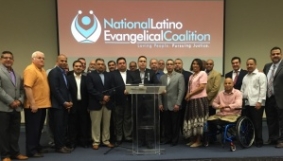
The statement comes as evidence mounts that the tide of opinion among Church leaders is turning away from capital punishment. Last Friday the National Latino Evangelical Coalition became the first national association of evangelical congregations to issue a call for repealing the death penalty. The coalition is urging its 3,000-member congregations to support efforts to end capital punishment in states across the country. In a March 17 statement, the Catholic bishops of Nebraska urged support for "legislative efforts to repeal the death penalty and reform our criminal justice system."
Public disquiet over several recent executions has contributed to the mood. The governor of Utah recently signed a bill that brings back firing squads as an option for executions. In Georgia, hundreds of clergy and other faith leaders have asked the state to commute the death sentence of Kelly Gissendaner, a Christian and student of theology. On March 17, Missouri executed a man who was missing 20 per cent of the frontal lobe of his brain. Last spring, the botched execution of an Oklahoma inmate drew scrutiny of lethal injection procedures.
The statement co-ordinated by Faith in Public Life says: "As Christians preparing for the holy days of Christ's suffering and death on the cross, we speak out with renewed urgency against the death penalty.
"Torture and execution is always a profound evil, made even more abhorrent when sanctioned by the government in the name of justice when other means of protecting society are available.
"All who reverence the sanctity of human life, created in the image of God, must never remain silent when firing squads, lethal injections, electric chairs and other instruments of death are viewed as morally acceptable."
It continues: "In many ways, capital punishment is the rotten fruit of a culture that is sown with the seeds of poverty, inequality, racism and indifference to life," and calls for a system of restorative justice.
Thirty-two US states have the death penalty while 18 have abolished it. Public support for capital punishment has declined over the last two decades, but is still relatively high at 63 per cent. Last year support was at only 60 per cent, the lowest since 1972.