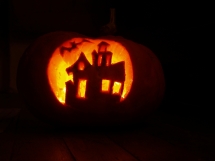
Many Americans love to celebrate Halloween and eagerly take part in the holiday by dressing up in fun or spooky costumes and giving away candies. However, according to a recent survey, 23 percent of Christians in the US do not take part in the celebration because of the holiday's pagan roots and for other reasons.
The survey, conducted by LifeWay Research, showed that three out of five Americans celebrate Halloween "all in good fun," but 21 percent of the respondents avoid it completely. Meanwhile, another 14 percent still observe it but avoid the pagan elements of Halloween, according to Charisma News.
"As popular and pervasive as Halloween has become, there is still a sizable minority that avoids at least some elements," said Scott McConnell, vice president of Nashville-based LifeWay Research.
Non-religious Americans (75 percent) have no issues with Halloween, with only 11 percent of them likely to avoid the holiday completely.
However, some Christians (54 percent) also believe that Halloween can be celebrated all in good fun, while 18 percent of them avoid it because of its pagan elements. Around 23 percent of Christians avoid Halloween for its pagan origins and other reasons.
Moreover, Catholics (71 percent) are more likely to say the holiday is "all in good fun" compared to Protestants (49 percent).
The survey found out that church attendance has a huge effect on Americans' perception of Halloween since those who attend religious services at least once a week are less likely to take Halloween in good fun (44 percent) as compared to those who only attend once or twice a month (68 percent) and those who attend church only on religious holidays (82 percent).
"More than two-thirds of evangelicals welcome the candy, costumes or community interaction surrounding the holiday, but the majority are unwilling to label 'the pagan elements of Halloween' good," McConnell said.
As far as geography and age are concerned, these two things have varying effects on one's attitude towards Halloween as well. Southerners (27 percent) are more likely than those in the West (19 percent), Midwest (18 percent), and Northeast (12 percent) to avoid Halloween completely.
The youth are more open to Halloween as compared to older Americans, too. Americans aged 55 years old and more (27 percent) are more likely to select "I try to avoid Halloween completely" than those aged 18 to 54 (17 percent).