
-
Every year about 2 million Muslims travel to Al-Masjid Al-Haram, Islam's most sacred mosque, in Mecca, Saudi Arabia, where they perform a number of spiritual rites, in a process known as the Hajj.
- Performing the Hajj, is one of the five pillars of Islam, and all able-bodied Muslims should go at least once in their lives if they can afford it. Umrah, which is known as the 'lesser pilgrimage', is a journey to Mecca (Makkah) at any time in the year.
- The pilgrimage lasts for six days. It occurs during Dhu Al-Hijjah, the 12th month in the Muslim calendar. This year, the Hajj is expected to fall on October 1-6, but it is difficult to know in advance as it is based on lunar cycles.
- Mecca is thought to be the place where Ishmael and his mother Hagar were provided with a spring of water in the desert. As it is the most sacred place in Islam, non-Muslims are forbidden from entering.
- The Kaaba, or 'the cube', is a black, box-shaped building at the centre of the mosque. It is built around a black stone, which many pilgrims try to kiss. Muslims believe the Kaaba was originally built by Abraham and Ishmael, but the site was re-dedicated by Muhammad and has been reconstructed since. When Muslims pray, wherever they are, they turn towards the Kaaba, and during the Hajj pilgrims walk anti-clockwise round it seven times.
- There are a number of other ritual acts during the Hajj, including 'the stoning of the devil'. Pilgrims travel to Mina, a small village about 5km from Mecca where throw pebbles at stone pillars which represent the devil.
- Both men and women dress in white during Hajj – a symbol of the state of purity they are entering. Changing their clothes is part of the process known as 'assuming Ihram', a sacred state that pilgrims adopt at the beginning of the Hajj. Pilgrims also refrain from wearing perfumes, men must not wear any sewn garments and women do not cover their faces.
- Pilgrims drink the water of the Zamzam well, located 20m east of the Kaaba, as it is thought to have special properties. The water is believed to come from the same source as the spring which provided water for Ishmael.
- The Eid Al-Adha is a feast marking the end of the pilgrimage. It is known as the feast of sacrifice, in remembrance of Abraham's willingness to sacrifice Ishmael, as the story is recorded in Islamic tradition.
- Many pilgrims stay in the thousands of white tents set up in the valley of Mina. Many suffer heat exhaustion in the 30-40˚C heat.




-

Edinburgh University ends divinity programmes as theology faces a changing future
-

Why the Archbishop of Canterbury’s award controversy matters
-

More than one in four US Protestant churchgoers believe some biblical truths become outdated
-

Catholicism in France has 'collapsed'
-

Christian leaders issue ‘sober and urgent call’ for Western Church to prepare for disruption
-

Australia's anti-therapy laws harm the most vulnerable - Britain should not copy them
Most Popular
related articles

'I used to be a Christian... but converted to Islam'
'I used to be a Christian... but converted to Islam'
Hummus, world peace and the kingdom of God
Hummus, world peace and the kingdom of God
Atheists, Baptists and Baha'i come together to tackle climate change
Atheists, Baptists and Baha'i come together to tackle climate change
8 things every Christian should know about Rosh Hashanah
8 things every Christian should know about Rosh Hashanah
Not in my name: How Muslims are responding to ISIS
Not in my name: How Muslims are responding to ISIS
Jerusalem: Chief Rabbis urge boycott of prayer vigil organised by US evangelicals
Jerusalem: Chief Rabbis urge boycott of prayer vigil organised by US evangelicals
News

Active faith linked to happier marriages and lower divorce rates, study finds
People who regularly attend church are more likely to report happy marriages, according to a new report examining the relationship between faith and family life.

Indian churches fearing anti-conversion laws tell non-Christians: enter at your own risk
Churches in Dhamtari, a town in the central Indian state of Chhattisgarh, have put up notices warning non-Christians that they enter at their own risk, weeks after a law against religious conversion came into force in the state.

£1k bursaries to help churches develop youth and community mentoring programmes
Churches across the UK are being offered bursaries to help them establish mentoring programmes aimed at supporting young people and others in their communities.
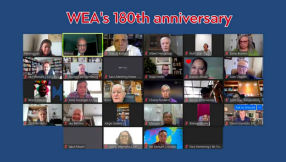
World Evangelical Alliance celebrates 180th anniversary
The World Evangelical Alliance (WEA) has held an online celebration to mark its 180th anniversary. Hundreds of people from more than 22 countries attended, and the event was rebroadcast to accommodate different time zones.








