The Turkish government has agreed that the first church can be built in the country in over 90 years, since the collapse of the Ottoman Empire in 1923.
According to AFP, the church will serve Turkey's Syriac community, which has between 15-20,000 members. It will be built in the Istanbul suburb of Yesilkoy, where churches are already open to Greek Orthodox, Catholic and Armenian communities.
A government source confirmed that the church will be "the first since the creation of the republic" on Saturday.
"Churches have been restored and reopened to the public, but no new church has been built until now," he said.
Turkey has a strong Christian heritage – the apostle Paul and Timothy were both born there, and the city of Antioch, now Antakya, was known as "the cradle of Christianity" – but a series of genocides in the early 20th century killed much of the Christian population. The collapse of the Ottoman Empire in 1923 also forced many Armenians, Assyrians, Greeks and Georgians to leave the country, and the population of Turkey is now over 97 per cent Muslim.
Though secularised at an official level and with a constitution that guarantees religious freedom, Turkey's government is often described as "Islamist". However, party leaders have rejected this claim. Former minister Hüseyin Çelik said in 2012: "These characterizations do not reflect the truth, and they sadden us."
Current President Recep Tayyip Erdoğan has also confirmed: "We are not an Islamic party, and we also refuse labels such as Muslim-democrat."
Churches, monasteries and synagogues have been restored in recent years in an attempt to improve minority rights as part of a bid to join the European Union. If successful, Turkey will become the first Muslim-majority country to join the EU.
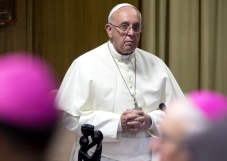
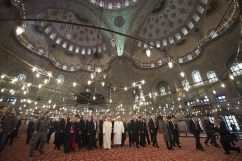
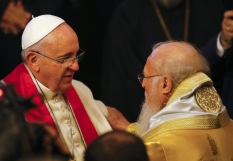
Despite increasing tensions in the region with the rise of Islamic State in neighbouring Iraq and Syria, there have been displays of inter-faith harmony. Pope Francis made a landmark trip to Turkey in November last year, where he prayed alongside a senior Islamic cleric at a Mosque in Istanbul.
A Vatican spokesman described it as a joint "moment of silent adoration" of God.