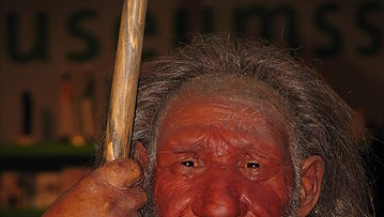
Our ancestral family tree seems to be constantly expanding.
A DNA analysis of a fossil wisdom tooth unearthed five years ago in a cave in Siberia revealed that a human-like creature, called the Denisovans, coexisted with modern humans and Neanderthals in the Eurasian continent tens and thousands of years ago.
A team of geneticists led by Susanna Sawyer of the Max Planck Institute for Evolutionary Anthropology took the task of analysing the Denisovan wisdom tooth.
The findings derived from their analysis of the fossil tooth were recently published in the Proceedings of the National Academy of Sciences. Anthropologist Bence Viola from the University of Toronto led the study.
The dental analysis showed that the enormous wisdom tooth was consistent with another tooth earlier unearthed in the Siberian cave, meaning that they are very likely both from the Denisovans.
Although scientists have yet to determine how the Denisovans exactly looked like, Viola said in a National Geographic report that there's little doubt that "large teeth with massive roots would probably require massive jaws."
The same team also found out that the Denisovans left an imprint on the modern human being's genetic make-up.
In the study, the researchers said the human-like creatures with big tooth contributed about five percent of the genome of modern Melanesians, who live in Papua New Guinea and other parts of the Pacific.
Pontus Skoglund, a postdoctoral researcher at Harvard University, considered the DNA analysis conducted on the Denisovan tooth as groundbreaking.
"This is a great paper that represents the new cutting-edge science of paleoanthropology," Skoglund told The National Geographic.
Sawyer, for her part, said that the more convincing evidence about the existence of the Denisovans open up the possibility that mankind has more sister species that existed ages ago.
"The world at that time must have been far more complex than previously thought. Who knows what other hominids lived and what effects they had on us?" Sawyer said.
Scientists, however, still have a lot to know about the Denisovans. For instance, they have yet to identify how old the Denisovan fragments are.