On this day in 1963, the artist, theologian and towering Christian intellectual CS Lewis died.
It was a moment that was famously overshadowed by the passing of another icon – US President John F Kennedy was assassinated on the same day. Renowned English writer and philosopher Aldous Huxley died on the same day too. It was a sad and remarkable coincidence that inspired a novel by author Peter Kreeft imagining the three figures meeting in Purgatory.
Although his passing was at first eclipsed by the death of a president, CS Lewis's legacy has undoubtedly endured to this day – it wouldn't be an overstatement to call him the most influential Christian writer of the 20<sup>th century. A humble figure such as Lewis would probably have distanced himself from such adulation, but his special capacity to unite Christian traditions remains an impressive feat. He himself was an Anglican, but he's now as much as beloved in Roman Catholicism as he is among conservative evangelicals.
Part of Lewis' appeal may be due to the drama of his own life, wisely narrated by Lewis biographer and enthusiast Alister McGrath in his CS Lewis – A Life. The Northern-Irish-born Clive Staples Lewis was first and for much of his youth a sceptical atheist, hardened by his experience of the First World War, and keen to disprove the surely far-fetched claims of Christianity. Yet over time, the Oxford literature professor experienced God's 'compelling embrace', and became as he would put it 'the most dejected and reluctant convert in all England'.
Lewis married his deep faith with his intellectual prowess in his most famous non-fiction work, the epochal apologetics book Mere Christianity, in which he lays out how Christian faith could not only stand up to scrutiny but provide the most profound and satisfying explanation for all of life. He told his more personal account of his faith journey in another classic: Surprised by Joy.
Lewis famously wrote: 'I believe in Christianity as I believe that the Sun has risen, not only because I see it, but because by it I see everything else.' Against a depressing materialism, Lewis made the case for meaning, hope and wonder in the world – best seen through the eyes of faith.
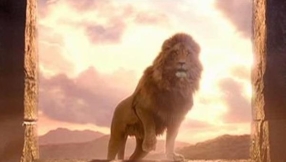
Lewis was gifted not only with refined communicative skill and intellectual rigour, but an infectious imagination – something best seen by turning to Lewis's other most famous work: The Chronicles of Narnia novels, a seven-book series written for children but adored by adults too. In The Lion, the Witch and the Wardrobe, he told an enchanting story that also served as a Christian allegory with profound theological insight – the image of the roaring lion Aslan – representing Christ – is one that still moves many today.
He also crafted more adult works like his Space Trilogy, which includes provocative social commentary about the future of humanity. Another standout work is The Screwtape Letters, in which he imagined this discourse of a senior demon Screwtape to his nephew Wormwood, advising him on how to bring about the damnation of a human soul. It created an entertaining and challenging device: the inverted, demonic lens provided a sharp satire on contemporary Christianity and a wealth of insight into the human condition.
Lewis married late in life to the American writer Joy Davidman, but he lost her four years late when she died of cancer. As McGrath writes, he 'had to think about life's great questions because they were forced on him by his own experiences. Lewis is no armchair philosopher. His ideas were forged in the heat of suffering and despair'.
He was never ordained, only a layman in the Church of England, which perhaps again is part of Lewis's appeal. He accomplished so much, but remined approachable, humble and unconsumed by his immense fame. At a decisive time in the 20<sup>th century, he offered a prophetic witness for the Church and to the world – an invitation to faith, hope and love in a war-ravaged reality that may have given up on such ideals. It's a testament to Lewis - and the wonder he pointed to - that he hasn't been forgotten.
You can follow @JosephHartropp on Twitter