The only chocolate Easter egg to explain the story of Jesus' death and resurrection in its packaging is going plastic-free for the first time.
Around 80 million Easter Eggs are sold each year across the UK, usually with several layers of packaging, including boxes, plastic casing and foil wrappers.
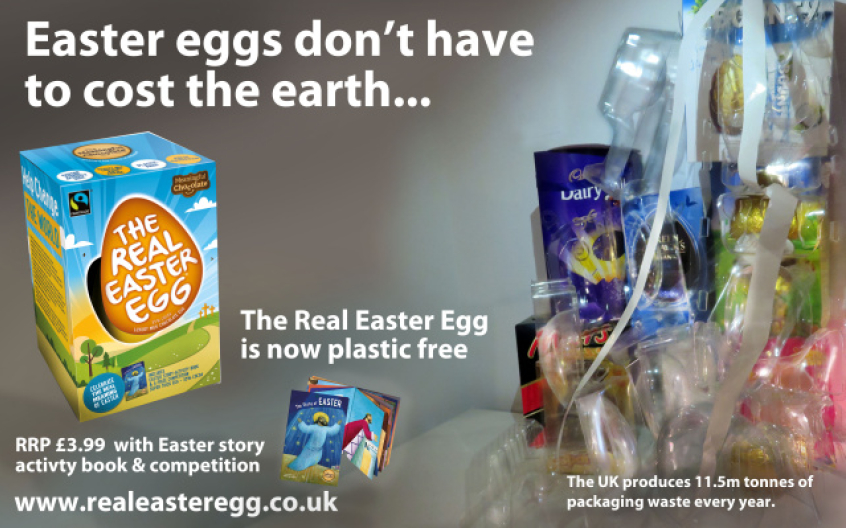
This year, the faith-based Real Easter Egg will be available to buy without plastic seals, stickers or packaging.
The change has been made in response to a survey by the egg's manufacturer, the Meaningful Chocolate Company, in which 96 per cent of Christians said they believed it was important for Easter eggs to be plastic free.
The Meaningful Chocolate Company's David Marshall said: 'Easter eggs don't have to cost the earth. We have replaced plastic bags, tamper-seals and Best Before stickers with paper versions.
'There is still the same amount of chocolate in the Real Easter Egg and the box sizes are the same but the redesign means our Dark and Original Egg will save at least 5 tonnes of plastic and 175 tonnes of card in the next five years.'
The change has been welcomed by church leaders including the Archbishop of York, Dr John Sentamu.
'I am delighted that an Easter Egg, which shares the story of Easter, is leading the way by reducing packaging,' he said.
'Clearly there is demand for unnecessary plastic to be removed from food packaging and I encourage people to let other manufacturers know that changes can be achieved.'
The Bishop of Salisbury, the Rt Rev Nicholas Holtam, said it was time for more Easter egg manufacturers to overhaul their packaging.
'As the lead bishop on the environment for the Church of England I am delighted that an Easter Egg, is taking seriously the care of our planet,' he said.
'This gets my approval. Indeed, the packaging of Easter eggs needs a revolution.'
In addition to being plastic free, the card and foil used in the Real Easter Egg packaging is 100 per cent recyclable. and it is certified Fairtrade, meaning that growers receive a fair price for their produce.
The Meaningful Chocolate Company also makes the egg without palm oil, the farming of which is believed to be a major factor in global deforestation.
The Real Easter Egg has become a staple of the Easter season for Christians in the UK after launching in 2010.
The chocolate egg was launched off the back of crowdfunding by churches and schools as an alternative to the swathes of secular eggs that made no mention of Jesus or the real meaning of Easter in their packaging.
In addition to the egg, a 24-page colour booklet is included in the box telling the Easter story. Part of the profits are also given over to charitable causes.
It was initially only available through mail order because big brand supermarkets refused to stock it. But after three years of campaigning by Church of England bishops, they finally caved in to pressure.
It is now available to buy at major supermarket chains, including TESCO, ASDA, Morrisons and Waitrose.