
War-torn Sri Lanka has welcomed the first of a series of visits around the world by an ecumenical team seeking to learn more about the peacemaking efforts of local churches in conflict-stricken regions.
The team - composed of church leaders from the United States, Kenya, Indonesia and South Korea - have been in Sri Lanka since last Saturday and will remain there until 12 August, the World Council of Churches (WCC) announced last month.
Members of the "living letters" team aim to express solidarity with local churches facing violent situations and report about their reconciliation efforts at the upcoming 2011 International Ecumenical Peace Convocation organised by WCC.
"We want the delegation to be exposed to the stark realities of war in the North and East before they meet church leaders and civil society representatives based in Colombo," said the Rev. Dr. Jayasiri Peiris, general secretary of the National Christian Council of Sri Lanka - host of the ecumenical team.
Sri Lanka has suffered from fighting between the government and the Liberation Tigers of Tamil Eelam (LTTE) for two-decades with a few years of peace after the two parties signed a Cease Fire Agreement on February 2, 2002. Yet sporadic fights continued even after the agreement was signed with the conflict intensifying since the end of 2005.
The rebel group LTTE says that it is fighting to create a separate state for the country's 3.1 million ethnic minority Tamils, which it says is discriminated in Sri Lanka.
According to the United Nations, some 70,000 people have been killed and 465,000 displaced by the conflict, including 205,000 uprooted since fighting intensified in April 2006.
Delegates currently visiting Sri Lanka will participate in exposure trips to areas in the northern and eastern regions of the country (Mannar, Batticaloa and Jaffna); meet with church leaders and officials of the National Christian Council; visit members of congregations in the country's capital Colombo and other areas; and meet with human rights activists.
The "living letters" teams are part of what is hoped to become a major worldwide mobilisation of churches for peace that will head into the International Ecumenical Peace Convocation to be held as conclusion of the WCC "Decade to Overcome Violence" in early May 2011.




-

Earl Spencer is right to raise concerns about the Church of England’s historic buildings
-

Decline in marriage and relationships among factors driving global fertility slump - study
-
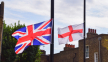
Christian nationalists 'are neither patriots nor Christians', says Church of England's parliamentary rep
-

Many Christians among the missing and dead after Nepal floods
-

Church vows to plough on with Project Spire
-

James Orr stands down as adviser to Reform after donations sting
Most Popular
News

When Eastern Europe appeared to be going Protestant
The crucial question is: why did so much of the early Protestant advance subsequently disappear?

Methodists submit environmental complaint against HSBC
HSBC has said it is committed to achieving climate related targets.

Leaked SNP abortion motion 'deeply troubling'
Abortion is now the leading cause of death in Scotland.

Around 300 Christians killed and over 200 abducted in Nigeria in July alone amid wave of attacks - report
At least 299 Christians were killed and more than 200 abducted across parts of Nigeria in July, according to a new report documenting a wave of attacks on predominantly Christian communities.