The Pope has grieved the violence that has "ravaged and displaced" so many hundreds of thousands of Christians inthe Middle East.
In a special Christmas letter to the faithful of the region, Pope Francis says: "I write to you just before Christmas, knowing that for many of you the music of your Christmas hymns will also be accompanied by tears and sighs."
He calls on the international community to step up its efforts to promote peace through negotiation and diplomacy, "for the sake of stemming and stopping as soon as possible the violence which has already caused so much harm."
He says: "How much longer must the Middle East suffer from the lack of peace? We must not resign ourselves to conflicts as if change were not possible!"
He singles out Islamic State as "a newer and disturbing terrorist organisation, of previously unimaginable dimensions, which has perpetrated all kinds of abuses and inhuman acts."
Christians have been "brutally driven out" of their native lands where they have been present since apostolic times, along with members of other religious and ethnic groups.
"I think in particular of the children, the young mothers, the elderly, the homeless and all refugees, the starving and those facing the prospect of a hard winter without an adequate shelter," he says. "This suffering cries out to God and it calls for our commitment to prayer and concrete efforts to help in any way possible."
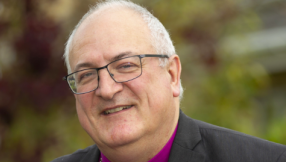
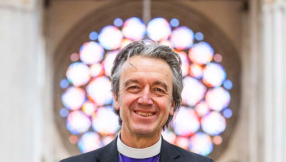
Concerns were also raised by Michael Nazir-Ali, former Bishop of Rochester.
Writing in The Spectator, he said: "It is hard to believe that at one time nearly the whole of the Middle East and much of north Africa were predominantly Christian. Think of the great Christian cities such as Alexandria, Damascus, Edessa, Constantinople and Carthage."
He stated openly that Islam was responsible for changing the picture. "The arrival of the newly Muslim Arabs disrupted the flow of history in the Middle East and beyond. The Christian cities capitulated one by one."
Some communities were destroyed and others dispersed and for those that remained, a system of discrimination was set in place with special taxes and other prescriptions. Under western pressure, this was relaxed in the 19th century and beyond.
"All of this informs the current situation. It has been, however, the rise of radical Islamism from the 1950s onwards has defined the place and treatment of minorities in the region. The Islamists have been keen to continue the disadvantages suffered by these communities in, for instance, repairing church buildings, and they have pressed for the introduction of fresh restrictions," he wrote, outlining a further "litany of persecution" that continues to the present and calling for the UK to promote freedom of belief and expression under Article 18 of the Declaration of Human Rights.
He also called for "intervention" where necessary.
"If Muslims need protection in the Balkans, the Kurds in Iraq or indigenous communities in the Americas or Australia, why not Christians in the Middle East and beyond? Such protection need not always be military or undertaken through the threat of economic sanction. It can often be achieved simply through raising awareness of the situation in which these communities find themselves."
However, in a leader column today, The Times newspaper says: "The persecution of Christians is not a war of religion."
The paper says that it is not because of Islam that religious liberties are under threat. "Rather, a peculiarly modern pathology of autocracy and political stasis in the Arab world has given rise to forces of intolerance." The column calls urgently for western policy makers to give "aid and solidarity" to the Christian communities of the Middle East.