The Rohingya people of Myanmar are regarded as some of the most persecuted people in the world. They are Muslims who live in a remote part of the northwest of the country and they are seen by many Burmese people as illegal immigrants from Bangladesh, though they have lived in the country for generations.
With the accession to power of Nobel prize winner Aung San Suu Kyi, revered in the West for her steadfast struggle against the regime for which she spent years under house arrest, there were hopes that their situation might find some relief. However, the new ambassador of the United States to Myanmar was asked last week to refrain from even using the term. The official Myanmar position is that the Rohingya are not among the officially recognised ethnic minorities. Scot Marciel was told that using the term was not "supportive of Myanmar's national reconciliation process".
To his credit, Marciel flatly refused. "Our position globally and our international practice is to recognise that communities anywhere have the ability to choose what they should be called... and we respect that," said Marciel, in response to a question on whether he intended to continue using the term Rohingya.
He added that this has been Washington's policy before and that the administration intended to stick to it.
The incident raises fears that far from Aung San Suu Kyi's regime heralding an improvement for the Rohingyas, under pressure from extreme Buddhist religious nationalists it's business as usual.
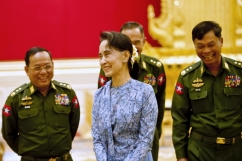
Aung San Suu Kyi has faced international criticism for not speaking up for the Rohingya people and challenging their treatment now that she has the power to do so. However, while she controls the government, religious nationalism in Myanmar is a powerful force. The Patriotic Association of Myanmar, abbreviated to Ma Ba Tha, has offices across the country. It's run by extremist Buddhist monks convinced Islam poses a deadly threat to Myanmar's identity. It's opposed to Aung San Suu Kyi's National League for Democracy, seeing it as soft on Muslims and too open to Western influence. It supports laws severely restricting religious freedom.
One of its most outspoken advocates, Ashin Wirathu, has called Muslims 'mad dogs'. Ma Ba Tha's precursor, the '969' movement, was implicated in violence in Rakhine state in 2012 that left more than 200 dead and a quarter of a million displaced. Many of them were Rohingya Muslims.
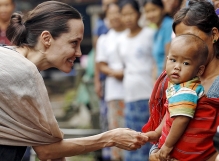
The Rohingya have borne the brunt of Buddhist nationalism. They face discrimination at every level. Many live in ghettos and refugee camps. Their land has been expropriated and given to Buddhist settlers. Violence, poverty and insecurity have driven many to take to boats in an effort to reach safety, as they believe, in Thailand; many have been left to drown.
Is Aung San Suu Kyi concerned about their fate? Perhaps. However, there are worrying signs that religious liberty and the plight of minorities are not at the top of her agenda – and that she may even be personally resistant to change.
Suu Kyi was interviewed in 2013 by BBC journalist Mishal Husain and was challenged about anti-Islamic attitudes in Burma. When Husain pressed her, she said: "I would like to make the point that there are many moderate Muslims in Burma who have been well integrated into our society, but these problems arose last year and I think this is due to fear on both sides.
"This is what the world needs to understand; that the fear is not just to the side of the Muslims but on the side of the Buddhists as well."
According to a book by Peter Popham, The Lady And The Generals: Aung San Suu Kyi And Burma's Struggle For Freedom, she was incensed by the questioning and was heard to mutter off-air, "No one told me I was going to be interviewed by a Muslim."
Suu Kyi has never made a clear statement opposing the persecution of Rohingyas and other minorities and she has refused to endorse the judgment of Human Rights Watch about Buddhist nationalist responsibility for violence and discrimination. She has been widely attacked for her apparent acquiescence in wrongdoing.
However, reflecting on the incident, Popham wrote that her background was tolerant and liberal. He suggests her domestic enemies have always attacked her for being too close to the West and not 'Burmese' enough and that she became "hyper-sensitive" to the charge. By depicting her as foreign, her enemies "tried to lump her together with the Muslim minority who are also regarded by many Burmese Buddhists as aliens with no right to remain in the country", he says. "My hunch is that Suu Kyi feared that if she spoke up for the Rohingya, it would make it easy for her enemies to repeat this argument – and if the Burmese masses fell for it, that could erode her standing and her chances of coming to power."
Now, however, she has come to power – and for the Rohingyas, all the signs so far are that nothing much is going to change.