The number of people fleeing persecution Burma has fallen dramatically this year, the UN refugee agency said today, as hope grows that religious freedom will improve under the new Burmese government.
"It is striking, there are many less people coming than last year," Volker Turk, assistant high commissioner for protection at the UNHCR, told Reuters in Bangkok.
"It's a combination of factors. As well as the new government, there are stronger activities against smuggling and trafficking. And the discovery of the mass graves last year also shocked people."
Thai police launched a campaign in May 2015 following the discovery of 30 bodies in graves near a human-trafficking camp close to the Malaysian border. The crackdown led criminals to abandon ships at sea with thousands of migrants aboard. Mass graves of suspected human-trafficking victims were also found on the Malaysian side of the border.
Thai and Bangladeshi crackdowns on human smugglers have also disrupted the networks that brought migrants from Burma and Bangladesh by sea to Thailand and Malaysia.
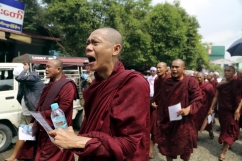
Many of those fleeing Burma are Rohingya Muslims from the western region of the country. A minority religious group, Rohingyas face "statelessness and systematic persecution," according to Human Rights Watch, which has previously warned of growing ultra-nationalism in Burma.
Last week, Christian charities urged the Burmese government to repeal laws which hinder religious freedom for all groups.
A joint statement by Christian Solidarity Worldwide and the Jubilee Campaign called on Burma to accept a number of recommendations for its human rights laws which "carry utmost importance" for religious liberty.
Cardinal Charles Maung Bo, a Catholic leader in Burma, also last week spoke out on the importance of religious freedom, particularly for the Rohingya community.
"Whatever the perspectives – and there are, within my country, a variety of perspectives – about the origin of the Rohingya people, there cannot be doubt that those who have lived in Myanmar for generations have a right to be regarded as citizens, and that all of them deserve to be treated humanely and in accordance with international human rights," he said.
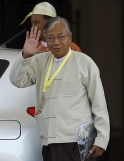
On Tuesday Burma's first civilian president for 70 years was nominated, ending decades of totalitarian military rule.
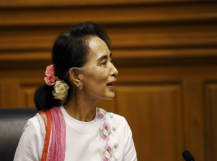
Aung San Suu Kyi's National League for Democracy (NLD) is forming a government that will take power on April 1. She and the NLD have been criticized for saying little about how they will address the Rohingya's situation in Rakhine State where about 140,000 people remain in camps.
The flow of migrants and refugees to Thailand from areas of conflict in other parts of Burma has also decreased as people hope for improvements under the NLD government, said the European Union's Ambassador to Thailand Jesus Sanz.
"The positive change... is the main cause for the reduction in numbers," Sanz told Reuters. "It remains to be seen how quickly the government will be able to stabilise the situation there and give real opportunities to these people."
The EU helps finance camps in Thailand near the border with Burma that hold more than 100,000 refugees.
The United Nations hoped political change in Burma would allow those refugees, some of whom have lived in Thailand for decades, to go home.
"I hope that voluntary repatriation will be a possibility in a year or two," Volker said.
Additional reporting by Reuters.